

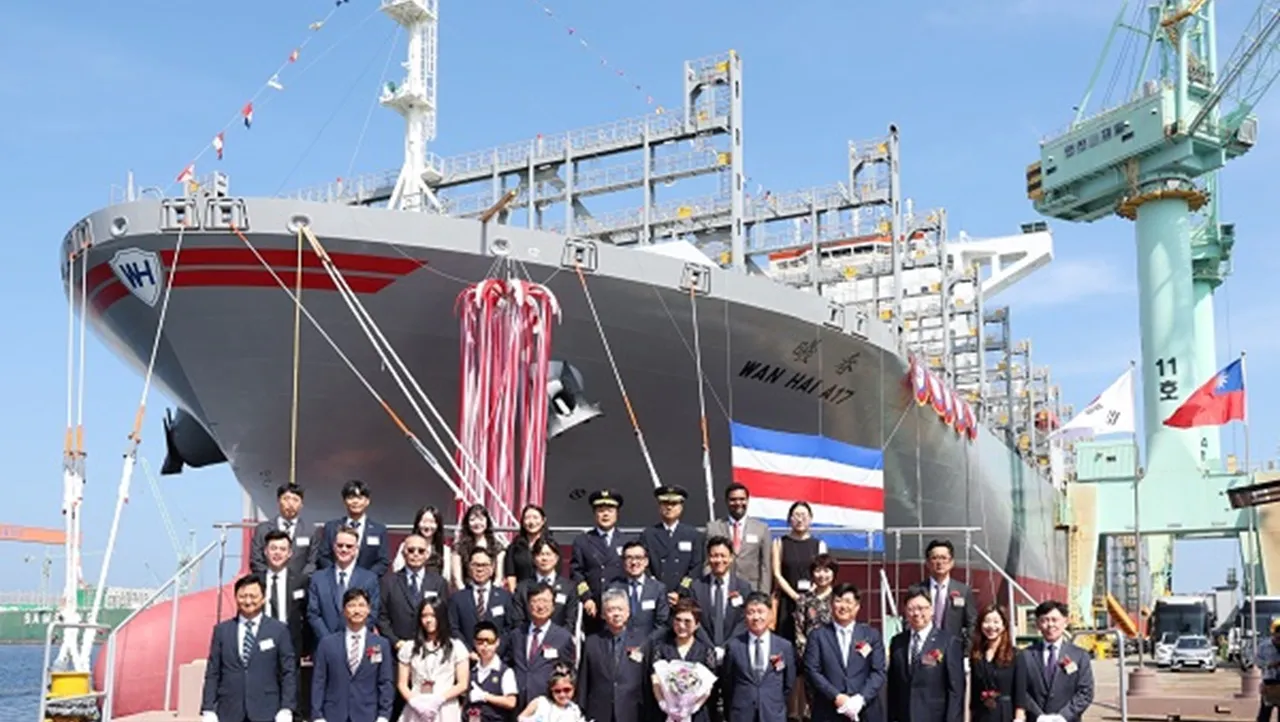
A major maritime collision in the busy waters off Guangzhou has left two seafarers missing and a Chinese-registered bulk carrier sunk, prompting extensive search and rescue operations and regulatory investigations.
Incident Overview
At around 20:00 local time on October 25, the Singapore-registered container ship Wan Hai A17 collided with the Chinese bulk carrier Hai Li 5 in the Lingding Channel of the Pearl River Estuary.
The Hai Li 5 sank shortly after impact. Of the 15 crew on board, 13 were rescued, while two remain missing. The Wan Hai A17, carrying 23 crew members, reported no injuries and no oil pollution. The container vessel is currently detained by authorities in China to assist with the ongoing investigation.
Traffic and Channel Conditions
The Lingding Channel is one of China’s busiest maritime routes, handling both deep-draft container ships and bulk carriers en route to the ports of Guangzhou, Shenzhen, and Hong Kong. Preliminary accounts suggest that the Hai Li 5 may have suffered a loss of power or steering before colliding with the Wan Hai A17, which was navigating along a regulated traffic lane. The rapid sinking of the Hai Li 5 indicates severe structural damage or a major hull breach immediately following impact.
Response and Rescue Operations
The Wan Hai A17 activated emergency protocols, deploying lifebuoys and launching a rescue boat to assist survivors. Chinese maritime authorities quickly mobilized surface vessels and aircraft for the search and rescue of the missing crew members. Vessel traffic in the area was temporarily restricted while salvage assessments and underwater surveys were initiated.
The Maritime and Port Authority of Singapore, as flag-state representative for the Wan Hai A17, is coordinating with the shipowner, Wan Hai Lines, and Chinese authorities in the investigation.
Impact and Consequences
The incident carries both human and operational consequences. Two crew members remain missing, and the chances of survival diminish as time passes. Environmental authorities have confirmed no immediate oil spill, though the sunken vessel poses potential long-term risks to marine life and navigation safety in the estuary.
From a commercial perspective, the detainment of the Wan Hai A17 will disrupt schedules and lead to potential insurance claims. Investigations will likely focus on vessel maneuvering decisions, traffic management efficiency, and possible equipment or propulsion failures.
Broader Industry Implications
Collisions in dense maritime corridors such as the Pearl River Estuary underscore the importance of strict navigation discipline, equipment reliability, and coordinated traffic management systems. For shipowners and survey firms alike, the Guangzhou collision serves as a critical reminder of the need for:
- Comprehensive maintenance and propulsion audits
- Regular risk assessments of navigation routes
- Strong emergency response preparedness
- Transparent coordination between flag, port, and coastal authorities
Conclusion
The collision between Wan Hai A17 and Hai Li 5 is a somber reminder of the constant vigilance required in global shipping operations. As investigations continue, the focus will remain on identifying the root cause, locating the missing crew, and ensuring measures are put in place to prevent similar incidents in one of Asia’s most vital maritime arteries.
Tell us What is Happening in Your Area: Contact Maritime Context at: news@maritimecontext.com
