

October 17, 2025
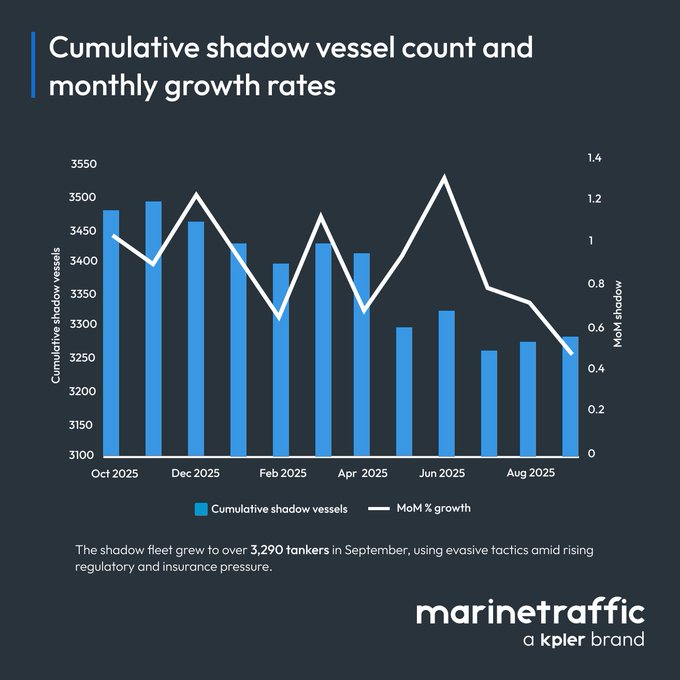
The global “shadow fleet” a loosely regulated network of aging oil tankers used to circumvent sanctions and tracking systems has grown by 16 vessels in September, reaching an estimated 3,290 ships, according to new data from MarineTraffic.
Over the past 12 months, this covert segment of the global fleet has moved more than 260 million barrels of oil across international waters, often operating under the radar of mainstream regulation.
What Is the Shadow Fleet?
The term shadow fleet refers to tankers that operate outside conventional maritime transparency and safety norms. These ships are typically older vessels—often beyond 15 or 20 years of service—that transport sanctioned or high-risk oil cargoes from countries such as Russia, Iran, and Venezuela.
To avoid detection, many of these vessels engage in deceptive shipping practices, including:
- Automatic Identification System (AIS) manipulation — intentionally disabling or falsifying tracking signals to obscure movements.
- Dark ship-to-ship (STS) transfers — exchanging cargo between vessels at sea, often in remote areas, without proper documentation.
- Use of obscure ownership and flagging structures — registering under “flags of convenience” or shell companies in jurisdictions with limited oversight.
While not all ships in the shadow fleet operate illegally, their activities exist in a regulatory grey zone that challenges global maritime governance and environmental accountability.
Rising Risks and Regulatory Pressure
MarineTraffic data indicates that the newest entrants to the fleet share the same high-risk profile — limited oversight, unclear ownership, and potential non-compliance with international conventions such as MARPOL and SOLAS.
This growth comes at a time when insurers, classification societies, and port-state control authorities are intensifying scrutiny on opaque operations. Major insurers in the West have withdrawn cover from vessels suspected of sanction evasion, forcing many shadow tankers to operate uninsured or under minimal protection from smaller, lesser-known firms.
Maritime analysts warn that this trend raises the likelihood of environmental incidents and complicates liability in the event of collisions or oil spills. The absence of transparent ownership structures also hampers accountability in case of maritime accidents or pollution events.
Industry Implications
The expanding shadow fleet underscores how sanctions and geopolitical tensions continue to reshape global oil logistics. With more ships operating outside regulatory systems, mainstream tanker operators face increasing compliance obligations, and port states must adopt advanced monitoring technologies to detect AIS gaps and false reporting.
Furthermore, the burden of enforcement is shifting toward coastal states and insurers, as international institutions struggle to keep pace with the scale and sophistication of evasion tactics.
Despite the fleet’s continued growth, experts suggest the operational burden is mounting. Older vessels require extensive maintenance, and ports are becoming more cautious about accepting high-risk tonnage — signaling that the shadow fleet’s long-term sustainability may be under pressure.
Outlook
As the shadow fleet expands, the maritime industry finds itself at a crossroads between maintaining global energy flows and ensuring adherence to international law. For regulators and legitimate operators alike, balancing enforcement with commercial reality will remain one of the most critical challenges shaping the tanker market in 2025.
Tell us What is Happening in Your Area: Contact Maritime Context at: news@maritimecontext.com
