

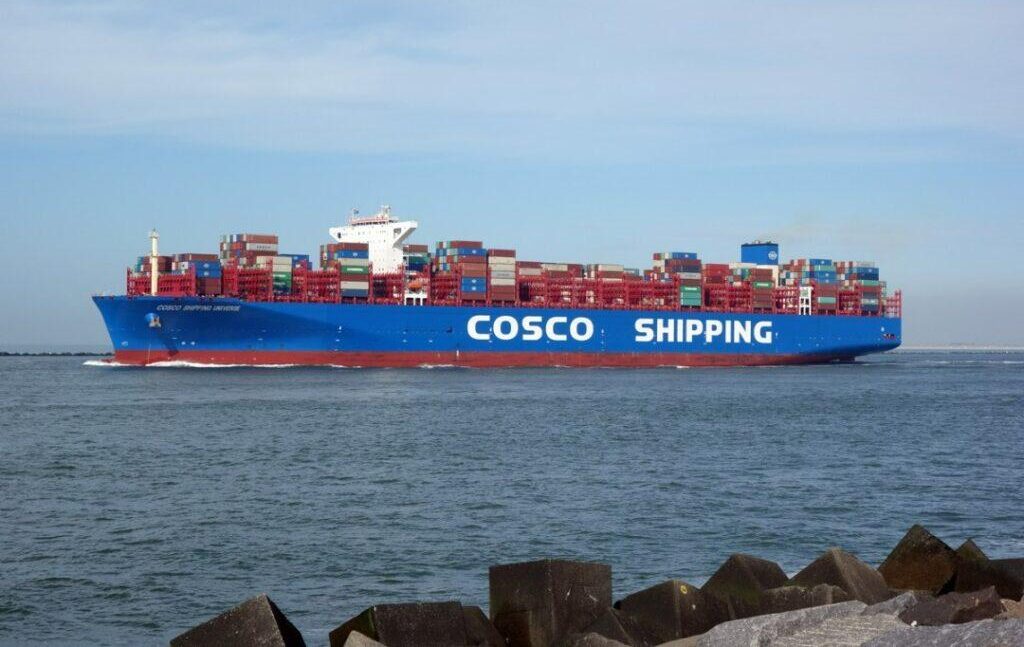
The United States has announced a new set of port entry fees targeting Chinese-linked vessels under Section 301 of the Trade Act of 1974, marking one of the most significant maritime enforcement measures since the U.S.–China trade war. The move, unveiled by the Office of the United States Trade Representative (USTR), is designed to counter what Washington calls “unfair Chinese practices” in shipbuilding, maritime logistics, and state-backed shipping subsidies.
The new structure—finalized after months of consultations—will see Chinese-operated, Chinese-built, and certain foreign-built vehicle carriers pay hefty port-entry fees when calling at U.S. ports. The policy takes effect on October 14, 2025, following a 180-day grace period for industry adjustment.
Fee Framework Under the Section 301 Action
The USTR’s ruling divides the new maritime fees into three categories, each targeting a different class of vessels associated with Chinese shipbuilding or operation.
Annex I – Chinese-Owned or Operated Vessels
Ships owned, operated, or controlled by Chinese entities—including Hong Kong and Macau—will be subject to a US$50 per net ton fee on entry into any U.S. port from foreign waters.
The charge will escalate annually to:
- US$80/NT by April 2026
- US$110/NT by April 2027
- US$140/NT by April 2028
Each vessel will be charged a maximum of five times per year, regardless of the number of U.S. calls made.
Annex II – Chinese-Built Ships Operated by Non-Chinese Firms
Non-Chinese companies operating vessels built in Chinese shipyards will also face levies. Two methods will apply, with the higher charge prevailing:
- US$18 per net ton (rising to US$33/NT by 2028), or
- US$120 per container discharged (increasing to US$250 per container by 2028).
Exemptions apply for certain cargo types, vessels arriving in ballast, or ships under U.S. government charter.
Annex III – Non-U.S. Built Vehicle Carriers
Foreign-built car carriers, including roll-on/roll-off (RoRo) vessels, will be assessed a US$150 per Car Equivalent Unit (CEU) capacity fee per voyage. This measure is intended to offset the dominance of Chinese-built vehicle carriers increasingly servicing global automotive routes.
USTR’s Justification
In its statement, the USTR said the action was taken “to level the playing field for U.S. shipbuilders and maritime operators,” asserting that China’s massive state subsidies have distorted the global shipping and shipbuilding markets. The office added that the fees would help fund “domestic maritime revitalization” while signaling a “firm stand against anti-competitive state practices.”
“China’s shipbuilding and maritime logistics sectors have long benefited from unfair state support, leading to significant harm to U.S. and allied industries,” the statement read. “Section 301 authority allows us to take decisive action to defend our economic interests and industrial capacity.”
China’s Reaction and Global Industry Concerns
Beijing swiftly condemned the decision, calling it “economic coercion” and warning of retaliatory measures against U.S. shipping and logistics interests operating in Chinese ports.
China’s Ministry of Commerce described the action as “a blatant violation of World Trade Organization principles” and hinted at counter-tariffs on U.S.-flagged cargo vessels or U.S.-bound logistics services.
Shipping industry groups have also voiced concerns about the broader impact on global supply chains, particularly for operators using Chinese-built tonnage for cost efficiency. Analysts predict potential re-routing of vessels, cargo diversions to Canadian and Mexican ports, and a possible increase in freight rates for U.S.-bound cargo.
Implications for Global Trade and Shipbuilding
Maritime analysts view the Section 301 port fee policy as part of a broader industrial strategy by Washington to revive domestic shipbuilding, reduce dependence on Chinese tonnage, and incentivize alternative sourcing from allied nations such as South Korea and Japan.
“This is not just about tariffs—it’s about industrial rebalancing,” said a Washington-based trade policy expert. “The U.S. is signaling that the era of unchecked Chinese dominance in commercial shipbuilding is coming under review.”
Ports and logistics firms, however, are bracing for administrative and cost burdens, with some warning that the fee structure could disrupt established shipping patterns if widely enforced.
The Road Ahead
The USTR confirmed that the fees will be reviewed annually, with potential adjustments based on compliance outcomes and diplomatic developments. In the meantime, maritime carriers have been advised to assess their exposure, re-flag vessels, or restructure ownership to mitigate the financial impact.
While the measures are framed as economic defense, they represent a significant escalation in maritime trade friction between the world’s two largest economies—one that could reshape shipping routes, shipbuilding orders, and port competitiveness for years to come.
Tell us What is Happening in Your Area: Contact Maritime Context at: news@maritimecontext.com
