

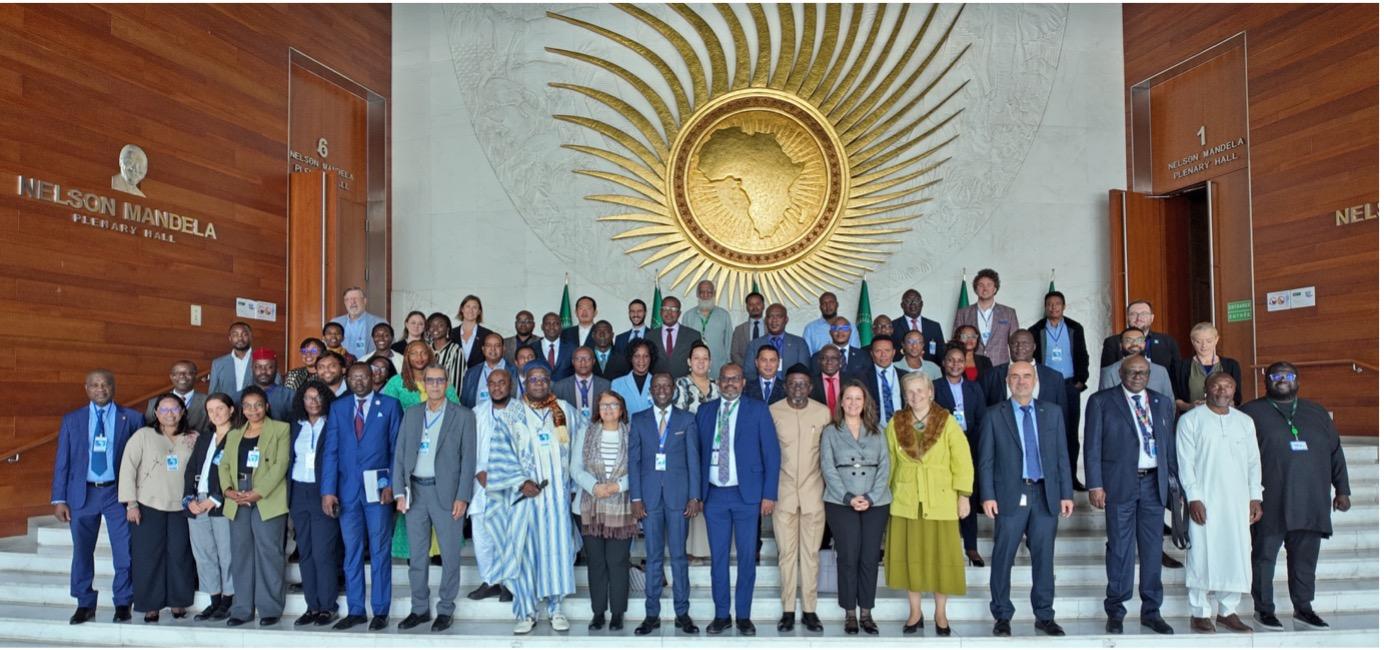
Addis Ababa, September 26, 2025 – Africa’s maritime domain is increasingly being recognized as a powerful engine of growth, resilience, and innovation. The Second Africa Blue Economy Week (ABEW25), co-hosted by the African Union Commission (AUC) and the United Nations Development Programme (UNDP) in Addis Ababa from September 23–25, has reaffirmed the continent’s commitment to harnessing its vast ocean and inland water resources sustainably.
With the theme “Advancing Sustainable Blue Growth for Economic Resilience”, ABEW25 brought together governments, private sector players, researchers, and civil society to chart a course that goes beyond natural treasures, aiming instead for transformative socio-economic impact.
From Vision to Action: Scaling the Blue Economy
Africa’s 30,000 km coastline and extensive river systems make it a natural Blue Economy powerhouse. Yet the sector remains underdeveloped compared to its potential. Speakers at ABEW25 stressed that if harnessed properly, Africa’s waters could generate millions of jobs, increase trade competitiveness, and help countries adapt to the mounting pressures of climate change.
Key areas of focus included:
- Sustainable fisheries and aquaculture to combat food insecurity.
- Green ports and shipping corridors to expand intra-African trade.
- Renewable ocean energy (offshore wind, wave, and tidal).
- Marine-based tourism and conservation to generate local livelihoods.
“This is not just about the oceans. It is about economic resilience—building systems that allow Africa to thrive despite global uncertainties,” AU officials noted.
Case Studies: Blue Economy in Practice
Kenya – Lamu Port and Coastal Development
Kenya has anchored its Blue Economy ambitions in projects such as the Lamu Port-South Sudan-Ethiopia Transport (LAPSSET) corridor, a multi-modal transport and logistics hub designed to link East Africa to global shipping lanes. While controversial for its environmental impacts, the port has spurred investments in fisheries, tourism, and coastal infrastructure, showing how large-scale projects can be reoriented towards sustainability if guided by proper regulation.
Senegal – Fisheries Reform for Food Security
Senegal, heavily dependent on fishing, has been piloting community-based fisheries management systems to combat illegal, unreported, and unregulated (IUU) fishing. Supported by international partners, these reforms aim to restore depleted fish stocks while ensuring that small-scale fishing communities retain access to marine resources. For Senegal, the Blue Economy is as much about protecting livelihoods as it is about boosting exports.
South Africa – Operation Phakisa
South Africa’s Operation Phakisa: Oceans Economy, launched in 2014, is one of the continent’s most ambitious frameworks for unlocking maritime potential. It focuses on shipbuilding, marine transport, aquaculture, and oil and gas exploration. While challenges persist, the program has attracted billions in investment and positioned Durban and Cape Town as hubs for ship repair and maintenance, creating thousands of jobs in the process.
Tackling Maritime Challenges
At ABEW25, delegates also confronted the obstacles holding back Africa’s maritime growth. Chief among them were:
- Illegal fishing, which costs the continent billions annually.
- Maritime insecurity, including piracy in the Gulf of Guinea.
- Pollution and habitat loss, threatening fragile ecosystems.
- Financing gaps, as many African countries struggle to attract capital for sustainable maritime projects.
The event underscored that regional cooperation, stronger governance frameworks, and innovative financing tools will be essential for overcoming these barriers.
Outlook: Towards a Sustainable Maritime Future
The outcome of ABEW25 points toward a continent that is beginning to see the Blue Economy as central to its future, not peripheral. By embedding sustainability into fisheries, ports, energy, and tourism, African states can move from resource extraction to value creation and resilience building.
If the strategies launched in Addis Ababa are carried forward, Africa could emerge not just as a custodian of its marine treasures but as a global leader in sustainable ocean development, contributing to the African Union’s Agenda 2063 and the UN Sustainable Development Goals.
In the words of one UNDP delegate: “Africa’s oceans are more than coastlines—they are lifelines. The challenge now is to turn opportunity into action.”
Tell us What is Happening in Your Area: Contact Maritime Context at: news@maritimecontext.com
