

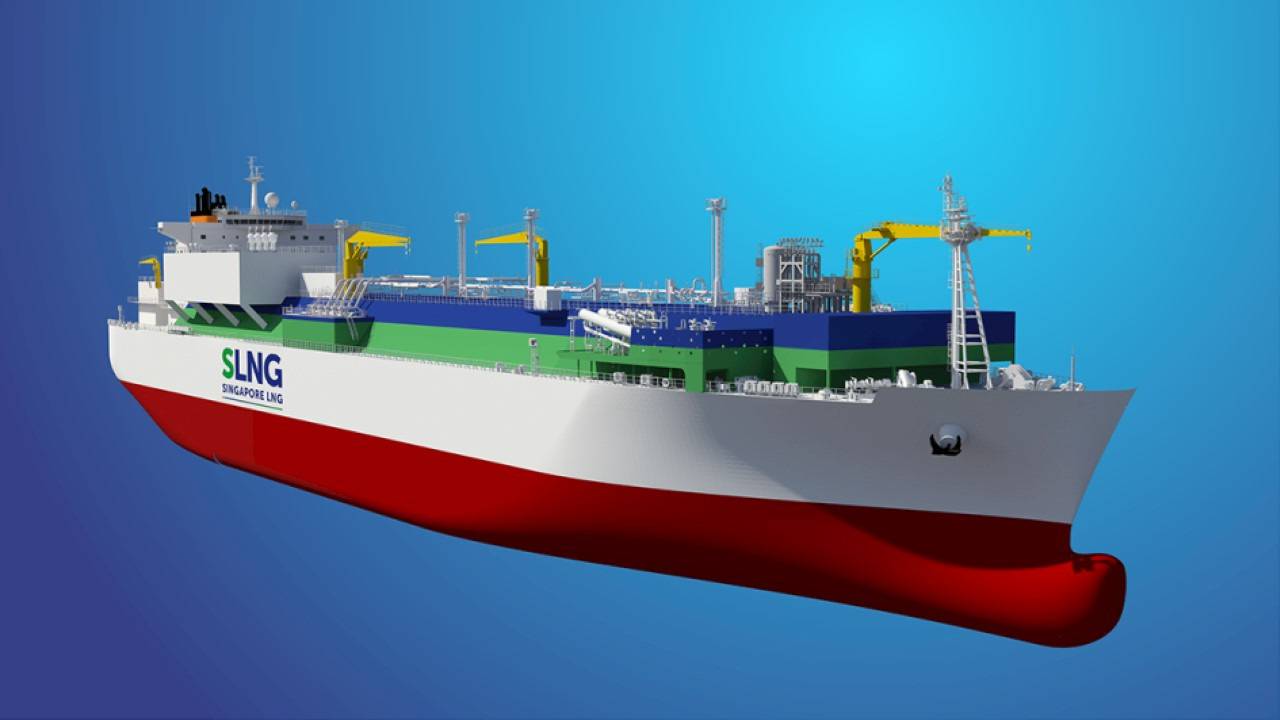
Singapore – Hanwha Ocean has awarded ABB a contract to supply the electric power and propulsion system for Singapore’s first floating liquefied natural gas (LNG) terminal, a landmark project that will strengthen the city-state’s energy resilience while setting new standards in sustainable offshore infrastructure.
The agreement brings together two global leaders in shipbuilding and marine technology. Hanwha Ocean, the South Korean shipbuilder formerly known as Daewoo Shipbuilding & Marine Engineering, has steadily expanded its portfolio to include offshore energy and decarbonization solutions. ABB, a Swiss-Swedish multinational, is recognized for advanced electrification and automation systems that enhance vessel efficiency and reduce environmental footprints.
A First for Singapore’s Energy Landscape
Singapore currently relies on land-based LNG regasification facilities on Jurong Island, operated by Singapore LNG Corporation (SLNG). The introduction of a floating LNG (FLNG) terminal marks a significant departure, offering flexibility, scalability, and faster deployment compared to conventional onshore terminals.
Officials note that the floating terminal will allow Singapore to better manage supply risks in an era of heightened energy market volatility. With the country importing nearly all its energy requirements, LNG has become a cornerstone of national energy security, supplying over 95% of Singapore’s electricity generation.
“The floating LNG terminal is not only a key infrastructure project, but also a strategic asset that reinforces Singapore’s role as a hub for LNG trading and bunkering in Asia,” said an energy analyst based in the region.
ABB’s Role in the Project
Under the contract, ABB will deliver an integrated package comprising electric power generation, distribution, and propulsion systems. This includes energy-efficient drives, advanced automation, and digital monitoring technologies that enable predictive maintenance and safe operations.
By replacing conventional mechanical systems with electric propulsion, ABB’s solution is expected to reduce fuel consumption and lower greenhouse gas emissions while improving reliability. The package will also provide redundancy to ensure uninterrupted power supply, a critical factor in LNG handling operations.
“ABB’s participation in this project ensures world-class technology integration for safe, efficient, and sustainable LNG operations,” Hanwha Ocean said in a statement. “The collaboration also aligns with Singapore’s Green Plan 2030, which emphasizes cleaner energy solutions for maritime and industrial applications.”
ABB noted that the floating LNG terminal represents a showcase opportunity for its marine electrification portfolio. “This project demonstrates how electrification and digitalization can drive efficiency and sustainability in critical energy infrastructure,” an ABB spokesperson commented. Delivery of the systems is scheduled in stages, with final commissioning timed to match the terminal’s operational launch.
Strategic and Regional Implications
Industry observers emphasize that floating LNG terminals offer distinct advantages for countries like Singapore. Unlike fixed onshore facilities, FLNG units can be deployed more rapidly, relocated if necessary, and expanded in modular fashion. This flexibility is particularly valuable in a dynamic energy environment shaped by geopolitical risks, shifting demand, and the global decarbonization agenda.
For Singapore, the terminal will diversify import infrastructure, reduce bottlenecks, and provide additional regasification capacity to meet growing demand in Southeast Asia. Analysts believe it could also strengthen Singapore’s competitive position as a regional LNG trading and bunkering hub, particularly as neighboring economies, including Vietnam, the Philippines, and Thailand, increase LNG imports to replace coal-fired generation.
The project is also expected to serve as a template for similar ventures across the region. With Asia forecast to remain the largest growth market for LNG over the next two decades, floating terminals are seen as a cost-effective and flexible way to expand infrastructure without the high capital costs and long lead times of onshore plants.
Energy Security Meets Energy Transition
The commissioning of Singapore’s first floating LNG terminal comes at a time of rapid transformation in global energy markets. While LNG continues to be a transitional fuel supporting decarbonization efforts, its infrastructure is increasingly expected to meet stricter environmental standards.
Hanwha Ocean has positioned itself as a key enabler of this transition, leveraging its shipbuilding expertise to develop LNG carriers, offshore production units, and low-carbon shipping solutions. The company has also been investing in hydrogen and ammonia-ready vessel designs, reflecting the broader industry push toward alternative fuels.
ABB, meanwhile, has accelerated its focus on electrification and automation to reduce emissions across the marine and offshore sectors. Its solutions have been deployed on LNG carriers, floating production storage and offloading units (FPSOs), and a wide range of offshore support vessels.
“The intersection of energy security and sustainability is where this project sits,” noted a maritime technology consultant. “Singapore is securing reliable LNG supplies while ensuring that the infrastructure meets modern efficiency and environmental standards. This dual focus is increasingly the norm across Asia’s energy sector.”
Global LNG Market Context
The development of Singapore’s floating LNG terminal coincides with rising LNG demand in Asia, which accounts for more than 70% of global imports. Driven by industrial growth, urbanization, and the gradual shift away from coal, demand is expected to climb despite short-term price volatility.
According to the International Energy Agency (IEA), global LNG trade reached 400 million tons in 2024, with Asia leading consumption. Southeast Asia alone is projected to require an additional 20–25 million tons annually by 2030 as countries expand gas-fired power generation to complement renewables.
At the same time, geopolitical uncertainties – from supply disruptions in the Middle East to sanctions affecting Russian exports – have underscored the need for diversified infrastructure. Floating LNG terminals, with their shorter lead times and lower capital outlays, are increasingly favored as strategic responses to these challenges.
A Showcase for Singapore
Once operational, Singapore’s first floating LNG terminal will not only enhance national energy resilience but also serve as a flagship project demonstrating how advanced shipbuilding and electrification technologies can be deployed for sustainable energy infrastructure.
“The project highlights the convergence of maritime innovation and energy policy,” one regional shipping executive observed. “It shows how countries can leverage floating solutions to meet both immediate energy needs and long-term decarbonization goals.”
Financial terms of ABB’s contract with Hanwha Ocean have not been disclosed, and project timelines remain closely held. However, industry sources suggest that the unit could be operational before the end of the decade, in line with Singapore’s medium-term energy transition targets.
Outlook
As Singapore positions itself for the next phase of energy and maritime development, the floating LNG terminal represents more than just infrastructure. It is a signal of intent: to remain at the forefront of global LNG trading, to adopt flexible and resilient energy solutions, and to integrate sustainability into every stage of the supply chain.
For Hanwha Ocean and ABB, the project underscores their roles as technology partners of choice in a sector increasingly defined by both innovation and environmental responsibility. For Singapore, it is a strategic investment that secures today’s energy needs while preparing for tomorrow’s decarbonized future.
Tell us What is Happening in Your Area: Contact Maritime Context at: news@maritimecontext.com
