

By Maritime Context News: 13/09/2025
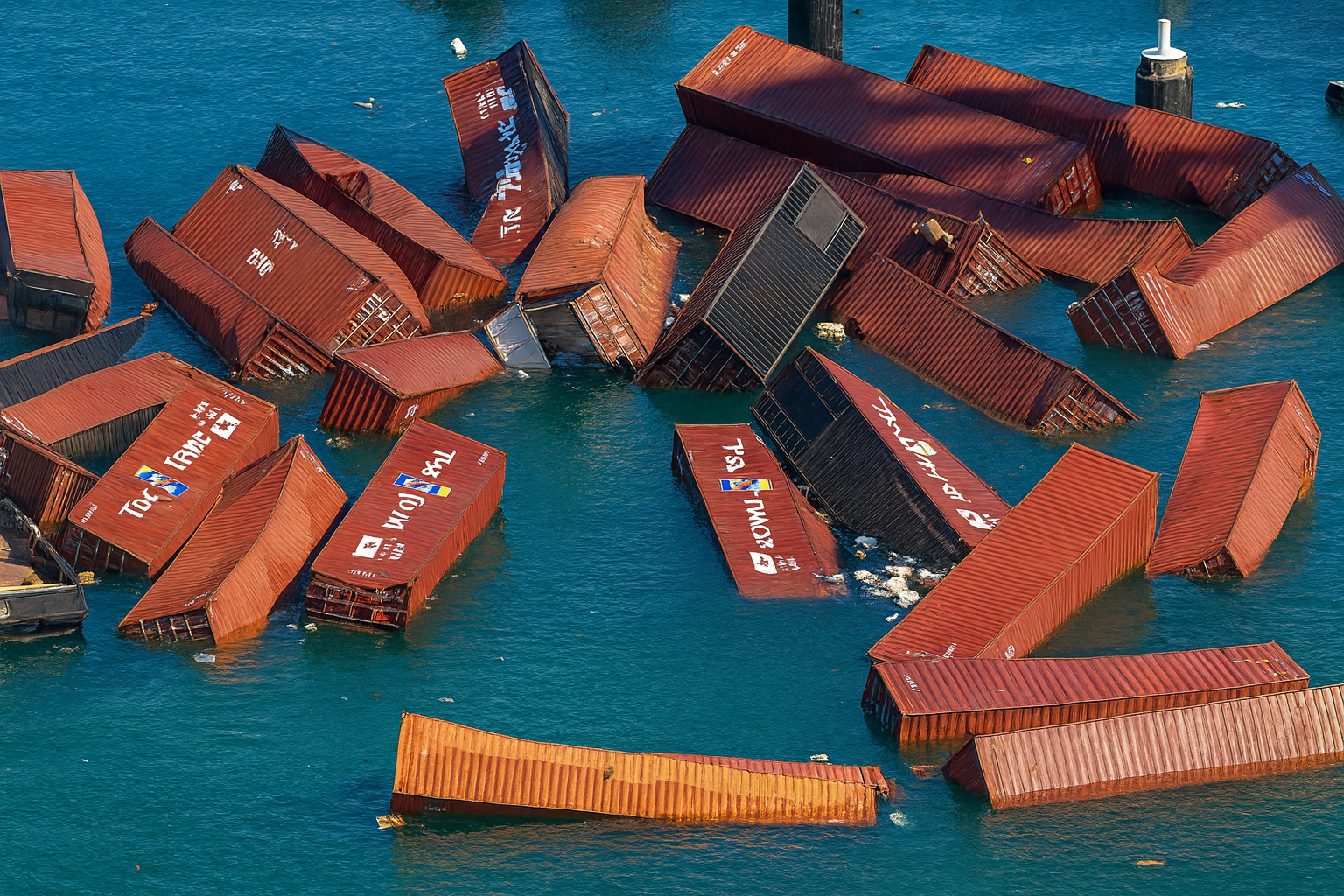
Long Beach, CA — The Port of Long Beach has restored normal operations after a dramatic container stack collapse sent dozens of boxes into the harbor earlier this week. Salvage teams continue recovery at Pier G, while a Unified Command led by the U.S. Coast Guard and National Transportation Safety Board (NTSB) investigates the cause.
Key Facts at a Glance
- Incident: Approx. 75 containers fell when stacks collapsed alongside the ZIM-chartered MV Mississippi at Pier G.
- Safety Zone: A 500-yard exclusion area remains around the vessel while sonar teams locate submerged boxes.
- Operations: All terminals are open; Pier G remains partly restricted until recovery and clearance are complete.
- Injuries & Environment: One minor injury reported. A damaged emissions barge created a light oil sheen, under active containment and monitoring.
How the Incident Unfolded
At around 09:00 local time on Sept. 9, stacks of containers toppled from the Mississippi during quayside operations, with some crashing onto the pier and others plunging into the harbor.
Emergency teams immediately halted work, declared a safety exclusion zone, and stabilized the vessel. By Sept. 11, the Port Authority had reopened truck gates at Pier G and reassigned vessel calls, keeping supply chains moving despite localized disruption.
Recovery & Response
- Unified Command: The Coast Guard, NTSB, Port of Long Beach, Long Beach Fire & Police, and U.S. Army Corps of Engineers are coordinating operations.
- Container Retrieval: Divers and cranes are recovering submerged units based on sonar mapping, with priority given to clearing navigation channels.
- Vessel Stability: Surveys confirmed that the Mississippi remains stable and safe for continued cargo discharge.
The Port’s rapid action and redeployment of labor minimized delays for other vessels, avoiding a repeat of previous congestion crises.
Cargo and Supply Chain Impact
The Mississippi carried 2,412 containers, with affected boxes reportedly containing consumer goods such as footwear, electronics, and furniture. Insurers, P&I Clubs, and loss adjusters have begun tallying claims and coordinating recovery costs.
Exclusive Commentary — Maritime Context Speaks with Dickens Ouma
As part of this coverage, Maritime Context News contacted Dickens Ouma, Marine Claims Investigator and Loss Adjuster at Observater Surveys & Services Ltd., for professional insight.
“This incident underscores why robust documentation at every stage of the supply chain is critical,” Ouma said.
“In container loss cases, liability depends on proving what was loaded, its condition, and whether proper stowage and lashing procedures were followed. Photographic records, tally sheets, and contemporaneous logs are not just good practice — they are legal shields when claims and arbitration follow.”
He emphasized that the Long Beach case will likely involve multi-jurisdictional claims, General Average contributions, and potential recovery actions against carriers or terminals.
“This is precisely where shipowners, charterers, and insurers must collaborate early, preserve evidence, and avoid fragmented claims handling that delays resolution,” Ouma told Maritime Context News.
Preparing African Ports for Similar Events
Ouma also shared a forward-looking perspective, particularly relevant for African ports undergoing rapid expansion:
“Ports across Africa — from Mombasa to Abidjan — can prepare for similar crises by investing in stack-height sensors, wind-load monitoring, and yard stability systems. Regular emergency drills and staff training on evidence preservation should be standard practice.
Pre-arranged salvage agreements with local diving contractors can drastically reduce downtime and keep trade lanes open. These steps build resilience and protect the port’s commercial reputation when unexpected events occur.”
Dickens can be found at: ops@observater.com or www.observater.com
Investigative Priorities
NTSB and Coast Guard investigators are examining:
- Lashing gear and stack configurations used on the Mississippi.
- Pier-side crane operations and handling procedures at the time of collapse.
- Weather, swell, and operational data that may have contributed to instability.
Findings from the investigation could lead to revised international guidelines on safe container stacking and pier operations.
Why This Matters
The Port of Long Beach handles roughly 40% of U.S. containerized imports, meaning even brief disruptions can have ripple effects across global supply chains. The quick recovery prevented major shipping delays and demonstrated the importance of contingency planning and infrastructure resilience — lessons that resonate worldwide.
Outlook
- Recovery crews will continue container retrieval until all hazards are removed.
- Environmental teams remain on site until risk from leaks or debris is fully mitigated.
- Industry watchers anticipate that NTSB’s final report will shape container safety practices across global terminals — including ports in Africa.
Tell us What is Happening in Your Area: Contact Maritime Context at: news@maritimecontext.com
