

London, September 2025 — A newly published cargo safety inspection report has revealed that more than one in ten shipments worldwide are being flagged for safety deficiencies, raising urgent questions about the enforcement of international standards, the accuracy of cargo declarations, and the preparedness of crews to handle high-risk goods.
The findings, released following coordinated inspections by international safety bodies and the National Cargo Bureau (NCB), point to persistent systemic issues that jeopardize vessel safety, crew welfare, and the protection of marine environments.
Troubling Failure Rates in Cargo Safety
The NCB, which has been spearheading container safety campaigns since 2020, conducted its most recent large-scale inspection initiative across multiple trade routes. The report revealed:
- 55% of all inspected containers were found to be non-compliant, far exceeding historical averages.
- Among containers carrying dangerous goods, the failure rate rose to 69%, with deficiencies ranging from misdeclared cargo to poor packaging and incorrect placarding.
- Even shipments not classed as high-risk displayed worrying levels of improper stowage and inadequate securing.
“This is not a marginal issue. Every tenth shipment flagged means tens of thousands of containers circulating globally with potential safety flaws,” said one NCB surveyor involved in the inspections.
Common Types of Deficiencies
The inspection findings highlight several recurring problems:
- Misdeclared cargo: Shippers failing to correctly identify hazardous goods, particularly chemicals and lithium-ion batteries.
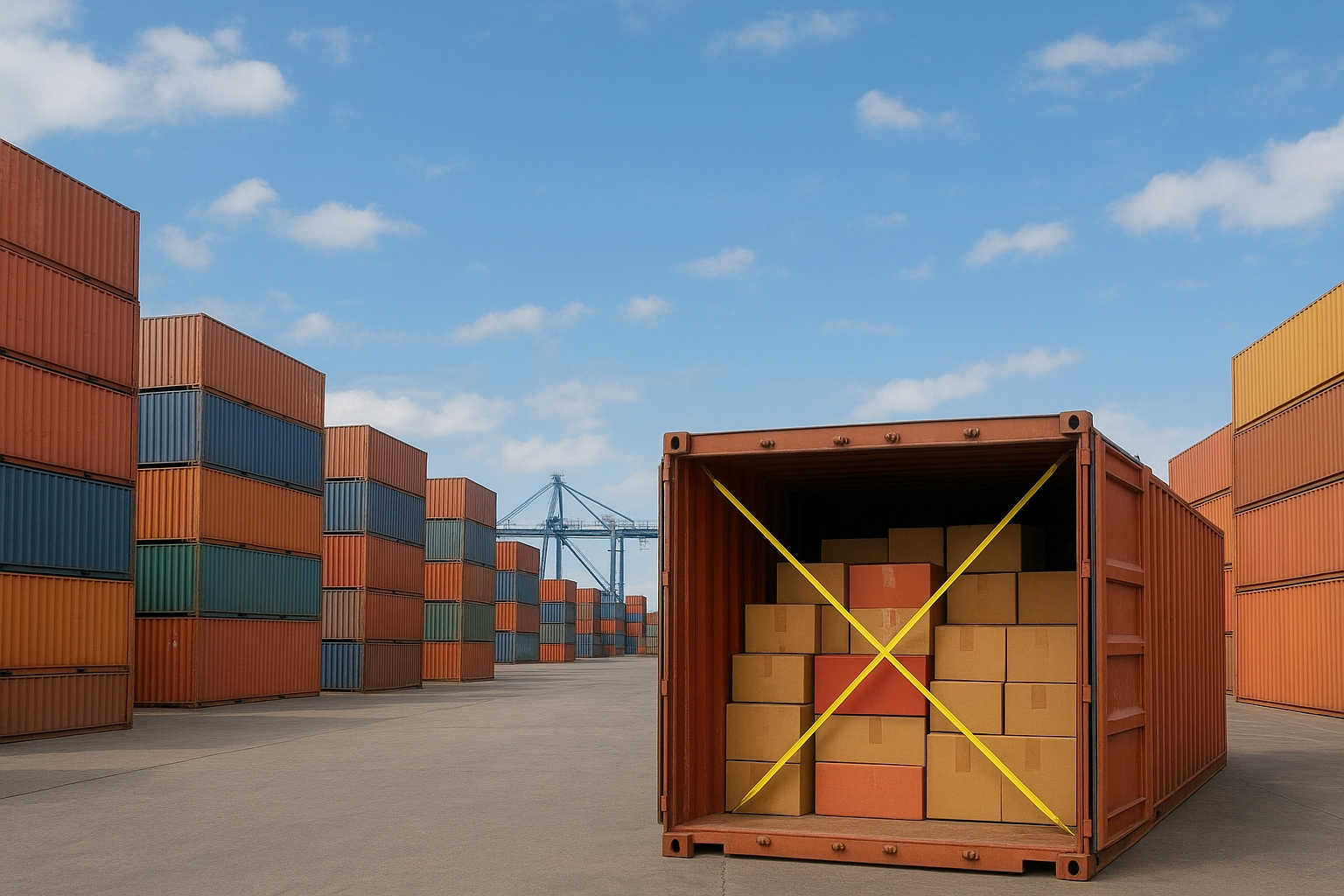
- Improper packaging and securing: Containers loaded without sufficient lashings, dunnage, or separation, raising the risk of cargo shift and fires at sea.
- Incorrect placarding: Dangerous goods shipped with missing or misleading hazard labels, making it difficult for crews and emergency responders to react appropriately.
- Incomplete documentation: Gaps in manifests, weight declarations, and Safety Data Sheets (SDS), undermining transparency in the supply chain.
Each of these issues not only violates the International Maritime Dangerous Goods (IMDG) Code but also compounds operational risks.
Wider Industry Context
The inspection results come against a backdrop of increasing scrutiny by Port State Control (PSC) authorities worldwide. According to the latest reports from the Paris and Tokyo Memorandums of Understanding, the most common deficiencies leading to vessel detentions continue to fall into three categories:
- Fire safety systems — including fire detection, suppression, and fire door maintenance.
- Life-saving appliances — such as lifeboats, life rafts, and rescue boats found defective or poorly maintained.
- ISM Code non-conformities — failures in companies’ Safety Management Systems, including training lapses and inadequate risk assessments.
Fire safety deficiencies alone account for more than 16% of all PSC detentions, underscoring the risk posed by unsafe cargo handling combined with inadequate onboard safeguards.
Rising Risks from New Cargo Types
Experts warn that the rise of energy transition cargoes, particularly electric vehicles (EVs) and battery shipments, has heightened the urgency of stricter inspections.
“Lithium-ion batteries are entering the supply chain at an unprecedented scale,” explained Felix Irimba, a logistics analyst based in Dar es Salaam. “When they are misdeclared or poorly packed, they present one of the most acute fire risks at sea. This report confirms that the industry still has not closed the gap between regulation and reality.”
Irimba added that shippers are under growing commercial pressure to move goods quickly, which in some cases leads to corners being cut in documentation and packing standards.
Regulatory and Industry Response
The International Maritime Organization (IMO) has already tightened certain provisions of the IMDG Code, but enforcement remains inconsistent across jurisdictions. Meanwhile, several industry groups are stepping in:
- Cargo Integrity Group (CIG) has renewed calls for 100% electronic documentation to reduce misdeclaration.
- Classification societies are advising shipowners to strengthen fire safety systems, especially on container vessels carrying mixed cargoes.
- Insurers have warned that rising claims linked to container fires and cargo losses could lead to higher premiums if compliance does not improve.
In addition, the NCB is expanding its remote container inspection program, encouraging carriers to adopt pre-shipment digital verification systems.
Implications for Shipping and Trade
The report’s revelation that over 10% of shipments are flagged for deficiencies underscores the scale of the challenge facing the maritime sector:
- Operational risks: Cargo misdeclaration can trigger shipboard fires, cargo shift, or explosions, endangering vessels and crews.
- Financial risks: Non-compliance can lead to costly delays, insurance claims, and reputational damage for shipping lines.
- Environmental risks: Unsafe cargo increases the likelihood of pollution incidents, particularly if hazardous substances leak or combust at sea.
The broader economic impact cannot be overlooked. With containerized trade moving nearly 200 million TEUs annually, even a 10% deficiency rate suggests that millions of unsafe shipments are entering the global supply chain every year.
Looking Ahead
Maritime regulators, carriers, and shippers now face a pivotal question: how to bring compliance levels closer to 100% in an increasingly complex logistics environment. While technology and digital inspection tools offer promise, experts stress that cultural change—placing safety above speed—remains essential.
As the NCB report concludes, “Cargo integrity is not optional. It is a shared responsibility that underpins the safety of global trade.”
Stay with us for verified, expert, and on-the-ground maritime journalism.
Contact: news@allinmaritime.com
Tel: +27 063 069 1191
Offices: Durban | Lagos | Abidjan | Dakar
All in Maritime News — Your Source for Maritime Intelligence
