

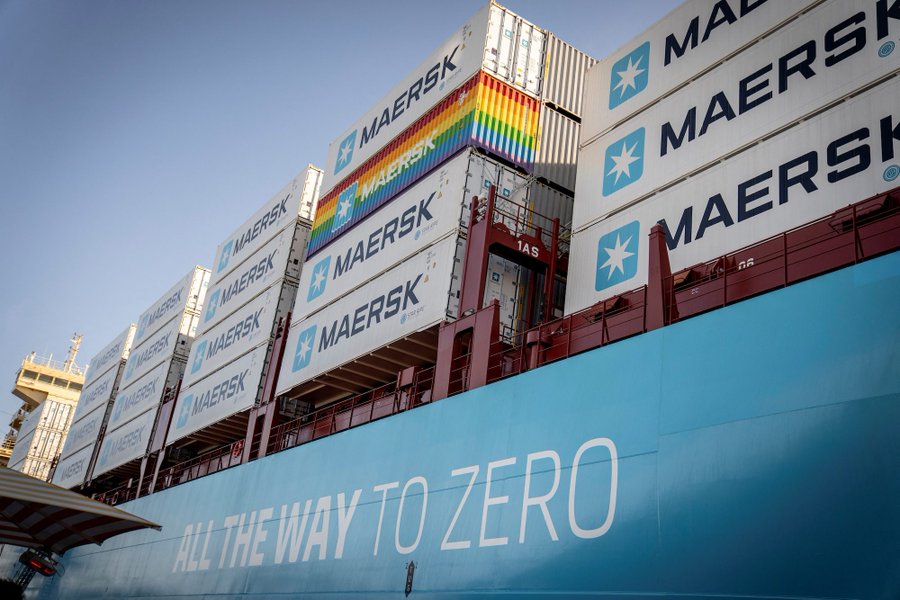
A new report from the Global Maritime Forum’s Getting to Zero Coalition announces that both methanol and ammonia have advanced from theory to practical use as zero-emission shipping fuels, marking a critical step forward in maritime decarbonization.
Based on interviews with approximately 40 influential industry organisations, the report titled From Pilots to Practice: Methanol and Ammonia as Shipping Fuels states that methanol is now ready for low-carbon operation, while ammonia has reached a piloting stage—a significant leap in maturity since the report’s first edition in 2020.
Methanol: From Concept to Early Scale
The report reveals that over 60 methanol-capable vessels are already in service, with 300 more on order, and bunkering facilities available at around 20 ports. Despite its lower energy density, operational trade-offs have not proven prohibitive. Retrofit kits and conversion-ready tanks are facilitating the shift of existing vessels to methanol.
Ammonia: Piloting Towards Broader Deployment
Ammonia is nearing readiness for commercial use. Engine trials suggest it can reduce tank-to-wake emissions by up to 95%. Early ammonia-powered vessels are undergoing successful pilot testing, with engine evaluations nearing completion and bunkering trials already underway. Operators report growing confidence in safely managing ammonia-powered shipping.
Scaling Challenges – Supply Chains and Policy Support
The report stresses that technological readiness alone is not sufficient. To scale up effectively by 2030, strong policies and supply chain development are required. Key priorities include:
- Enhancing green methanol supply
- Validating and expanding commercial ammonia bunkering at key ports
- Introducing policy incentives, harmonized fuel certification, book-and-claim systems, CAPEX grants, and collaborative green corridors
Broader Industry Context
Other recent findings reinforce the momentum for these fuels. Lloyd’s Register’s Zero Carbon Fuel Monitor highlights rising vessel readiness—315 methanol-capable and nearly 500 methanol-ready ships, along with more than 400 ammonia-ready vessels.
Meanwhile, regulatory momentum is building. The International Maritime Organization is negotiating a global carbon pricing mechanism, aiming for adoption in 2025 and implementation by 2027, which could incentivize the shift to zero-emission fuels like ammonia and methanol.
Summary Table
| Fuel Type | Current Readiness Level | Key Advantages | Primary Hurdles |
|---|---|---|---|
| Methanol (green/e-methanol) | Ready for low-carbon operations | Existing engine retrofits; growing fleet | Limited green supply; higher cost |
| Ammonia (green ammonia) | Ready for pilot deployment | High emission reduction potential (up to 95%) | Toxicity, infrastructure development, safety training |
Conclusion:
The latest industry findings confirm that methanol has advanced into operational use, while ammonia is approaching practical pilot deployment as zero-emission shipping fuels. Significant progress has been made, yet scaling these fuels will depend on policy support, infrastructure development, and supply chain expansion. For shipping’s zero-carbon transition to succeed by 2030, collaborative action across industry, regulators, and ports is essential.
Stay with us for verified, expert, and on-the-ground maritime journalism.
Contact: news@allinmaritime.com
Tel: +27 063 069 1191
Offices: Durban | Lagos | Abidjan | Dakar
All in Maritime News — Your Source for Maritime Intelligence
