

London — August 13, 2025
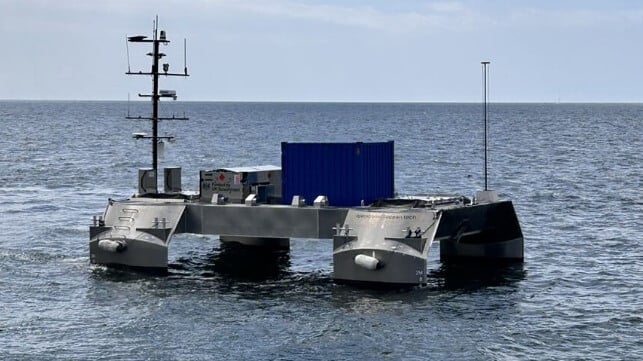
The UK has certified its first fully remotely operated and unmanned vessel, marking a major milestone for the nation’s autonomous maritime sector. The vessel, named Pioneer, developed by ACUA Ocean, has been approved under the UK Maritime and Coastguard Agency’s Workboat Code Edition 3, Annex 2 framework, with certification issued by Lloyd’s Register.
The achievement represents the first time a UK vessel has met the stringent Annex 2 standards, setting a precedent for future unmanned surface vessel (USV) operations in British waters.
Vessel Capabilities
Pioneer is a 14.2-metre hydrogen fuel cell–powered USV, designed to operate with zero crew onboard while being fully controlled from a remote operations centre. The vessel’s modular pontoon-based construction allows it to carry specialized sensor and equipment payloads housed in a standard 20-foot ISO container positioned within a moonpool.
Engineered for offshore endurance, Pioneer can operate safely in sea states with waves of up to four metres and maintain stable deployment of payloads. Its design prioritises environmental performance, using hydrogen as a clean energy source to reduce emissions and noise.
Certification Significance
The certification marks a regulatory breakthrough for the UK’s maritime sector. The Workboat Code Edition 3, Annex 2 sets out safety and operational rules for unmanned and remotely operated vessels under 24 metres. This formal approval confirms Pioneer meets all safety, operational, and construction requirements for its category.
Lloyd’s Register, authorised by the MCA to conduct such certifications, has been closely involved in guiding the project from concept through to approval, ensuring compliance with new and evolving autonomous vessel regulations.
Next Steps and Trials
With certification secured, Pioneer will now begin operational trials, running exclusively on hydrogen power in various offshore scenarios. These trials will test endurance, reliability, and remote-control systems under real-world conditions.
Following the trials, ACUA Ocean plans to expand its portfolio to include larger and more advanced autonomous platforms, such as the 24-metre Maelstrom, which will offer increased endurance and payload capacity.
The project emerged from the UK’s Clean Maritime Demonstrator Competition, aimed at accelerating the deployment of sustainable marine technologies and positioning the country as a leader in clean, autonomous shipping solutions.
Why It Matters
- Regulatory First – Demonstrates that UK infrastructure is ready to integrate unmanned vessels into commercial and operational fleets.
- Environmental Leadership – Hydrogen fuel cell propulsion supports national decarbonisation goals.
- Operational Potential – Opens opportunities for autonomous vessels in offshore monitoring, surveillance, and logistics.
The Pioneer’s approval signals the UK’s readiness to embrace next-generation maritime technologies and paves the way for broader use of autonomous, zero-emission vessels in its waters.
Stay with us for verified, expert, and on-the-ground maritime journalism.
Contact: news@allinmaritime.com
Tel: +27 063 069 1191
Offices: Durban | Lagos | Abidjan | Dakar
All in Maritime News — Your Source for Maritime Intelligence
