Close Menu
Maritime Context NewsMaritime Context News
  • Home
  • Marine Innovation
  • Nautical Science
    • ship handling
    • anchoring
    • navigation equipment
    • ship handling
  • Naval Arch
  • Maritime Law
    • Nautical Science
    • Marine Incidents
    • Marine Engineering
  • Partners
  • Extras
    • Life At Sea
    • Maritime Knowledge
    • Case Studies
    • Types of Ships
    • Ship Safety
    • Stories
    • Videos
    • Apps
  • News Page 001
  • OSL
What's Hot

Taiwan Strait Transits: Testing Freedom of Navigation or Provoking Conflict?

January 20, 2026

US Forces Seize Sanctioned VLCC Skipper Off Venezuela in Major Crackdown on Illicit Oil Trade

December 11, 2025

Port Authority of New South Wales Halts Inbound Shipping After Kayak Protesters Enter Harbour Lanes

December 1, 2025
Facebook X (Twitter) Instagram
Maritime Context NewsMaritime Context News
Facebook X (Twitter) Instagram
Subscribe
  • Home
  • Marine Innovation

    Navigating Cargo Damage, What to Do if Damage to Cargo Happens before Cargo Arrives at Consignees Warehouse? We Asked The Observater Group

    August 10, 2025

    How To Use DeepSeek R1 On Your Mobile Phone, Tablet, PC For Free

    March 11, 2022
  • Nautical Science
    1. ship handling
    2. anchoring
    3. navigation equipment
    4. ship handling
    5. View All

    SpaceX Launches Starlink Satellites on ‘American Broomstick’ and Lands Rocket at Sea

    March 11, 2022

    Science and Tech Reforms Priority for New Year

    March 11, 2022

    Top Chinese Science and Tech Official Urges Priority on Research

    March 11, 2022

    Virtual Reality Gaming Gets Bigger with Zero Latency’s Entry

    March 11, 2022

    Stena Line Completes Acquisition of Terminal Operations in Latvia’s Port of Liepaja

    January 28, 2026

    Maersk Poland Honoured with ‘Logistics Operator of the Year 2025’ Award for Sustainable Logistics

    January 28, 2026

    Electric Trucking Isn’t the Future; It’s Already Reshaping Global Logistics

    January 22, 2026

    Shipping Giant CMA CGM Reroutes Ships Around Suez Canal Amid Global Uncertainty

    January 22, 2026

    Stena Line Completes Acquisition of Terminal Operations in Latvia’s Port of Liepaja

    January 28, 2026

    Maersk Poland Honoured with ‘Logistics Operator of the Year 2025’ Award for Sustainable Logistics

    January 28, 2026

    Electric Trucking Isn’t the Future; It’s Already Reshaping Global Logistics

    January 22, 2026

    Shipping Giant CMA CGM Reroutes Ships Around Suez Canal Amid Global Uncertainty

    January 22, 2026

    Stena Line Completes Acquisition of Terminal Operations in Latvia’s Port of Liepaja

    January 28, 2026

    Maersk Poland Honoured with ‘Logistics Operator of the Year 2025’ Award for Sustainable Logistics

    January 28, 2026

    Electric Trucking Isn’t the Future; It’s Already Reshaping Global Logistics

    January 22, 2026

    Shipping Giant CMA CGM Reroutes Ships Around Suez Canal Amid Global Uncertainty

    January 22, 2026

    Tisur Announces US$700 Million Expansion to Boost Capacity at Matarani Port Terminal

    November 17, 2025

    South Africa’s Coega and Durban Rank Among World’s Worst Container Ports, Cape Town Shows Strong Gains

    September 25, 2025

    AD Ports Group Commences Construction of Luanda Terminal with $250 Million Investment

    September 22, 2025

    PM Modi: Blue Economy Is Central to India’s Growth Strategy

    September 19, 2025
  • Naval Arch

    Stena Line Completes Acquisition of Terminal Operations in Latvia’s Port of Liepaja

    January 28, 2026

    World Bank Report: Developing Ports Shine Despite Global Decline in Efficiency

    September 24, 2025

    Oman to Establish Middle East’s First Green Ship Recycling Hub

    September 3, 2025

    Navigating Cargo Damage, What to Do if Damage to Cargo Happens before Cargo Arrives at Consignees Warehouse? We Asked The Observater Group

    August 10, 2025

    Port of Bilbao Advances Shore Power Project with €11.5M Solar PV Deal

    August 7, 2025
  • Maritime Law
    1. Nautical Science
    2. Marine Incidents
    3. Marine Engineering
    Featured
    By Ruth MDecember 11, 2025

    Ukraine Detains Russian-Linked Cargo Ship in Odesa Port

    By Ruth MDecember 11, 2025
    Recent

    Ukraine Detains Russian-Linked Cargo Ship in Odesa Port

    December 11, 2025

    London Arbitration Court Rules Djibouti’s Doraleh Port Seizure Unlawful, but No Damages Awarded

    October 4, 2025

    Chief Engineer Pleads Guilty in 2024 MSC Runaway Incident in Charleston

    September 23, 2025
  • Partners
  • Extras
    1. Life At Sea
    2. Maritime Knowledge
    3. Case Studies
    4. Types of Ships
    5. Ship Safety
    6. Stories
    7. Videos
    8. Apps
    Featured
    By Ruth MJanuary 28, 2026

    Maersk Poland Honoured with ‘Logistics Operator of the Year 2025’ Award for Sustainable Logistics

    By Ruth MJanuary 28, 2026
    Recent

    Maersk Poland Honoured with ‘Logistics Operator of the Year 2025’ Award for Sustainable Logistics

    January 28, 2026

    General Average Declared Following ONE Henry Hudson Fire in Los Angeles

    December 1, 2025

    Shadow Fleet Crisis Deepens: Third Tanker Incident off Senegal Follows Black Sea Drone Strikes

    November 30, 2025
  • News Page 001
  • OSL
Maritime Context NewsMaritime Context News
Home » Homepage » U.S. Tariffs on India Add Fresh Uncertainty for Shipping Lines Seeking China Alternatives
Featured

U.S. Tariffs on India Add Fresh Uncertainty for Shipping Lines Seeking China Alternatives

Ruth MBy Ruth MAugust 13, 2025No Comments6 Mins Read
Share Facebook Twitter Pinterest LinkedIn Tumblr Telegram Email Copy Link
Follow Us
Google News Flipboard
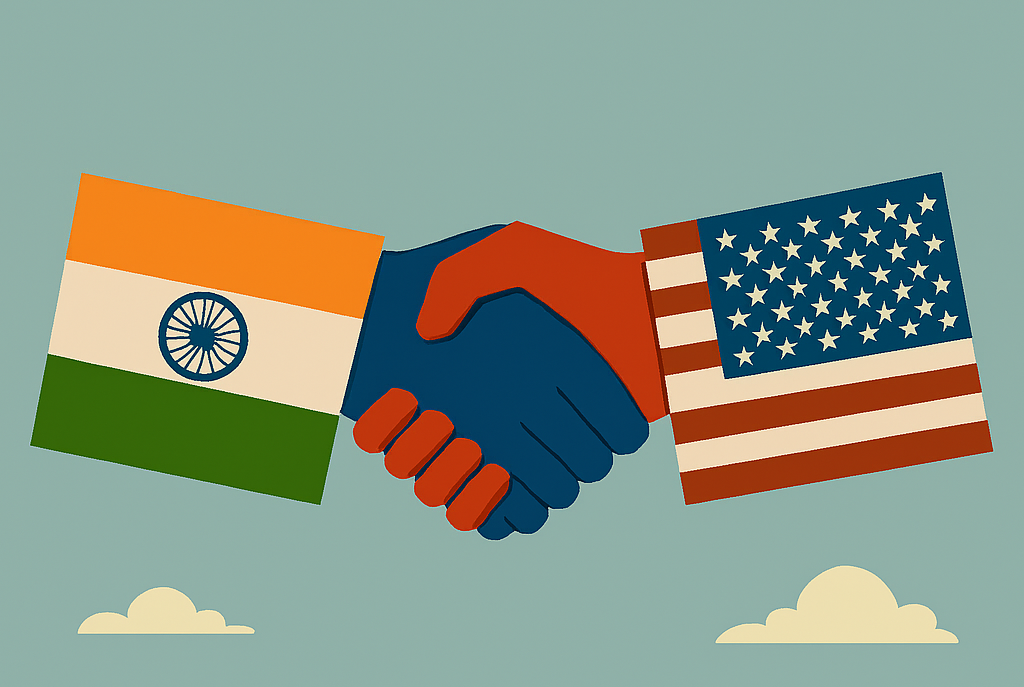
For Representation Purpose Only
Share
Facebook Twitter LinkedIn Pinterest Email

The U.S. government’s recent decision to double tariffs on a wide range of Indian goods has rattled the maritime and logistics sectors, adding a new layer of uncertainty for carriers, freight forwarders, and cargo owners who have increasingly looked to India as a key alternative sourcing hub to China.

For much of the past decade, U.S.–China trade tensions have prompted a significant shift in global supply chains. Carriers have introduced new services linking Indian ports directly to U.S. gateways, logistics operators have expanded inland connections, and exporters have invested heavily in manufacturing facilities designed to serve American markets. Now, these strategic moves face a fresh challenge.


Why India Became the “Plan B” for Shippers

India’s emergence as a manufacturing and export hub has been fueled by several factors: competitive labour costs, an expanding infrastructure network, and government incentives for industries ranging from textiles to electronics.

In maritime terms, Indian ports like Nhava Sheva (Jawaharlal Nehru Port), Mundra, and Chennai have positioned themselves as high-volume, high-efficiency gateways with direct sailings to North America. This has allowed shipping lines to offer reliable alternatives to congested Chinese and Southeast Asian routes.

The recent tariff hike directly impacts this strategy. By making Indian goods less competitive in the U.S. market, the measure could slow containerised trade growth between the two nations, potentially undermining years of investment in these corridors.


What the Tariffs Cover and Why They Matter

The tariffs—doubled across a broad range of goods—are being framed by U.S. authorities as a penalty for India’s continued purchase of Russian crude oil, a policy seen as undercutting Western sanctions. The targeted goods span multiple sectors, including apparel, automotive components, steel products, and certain processed foods—all of which contribute to steady container flows.

While the policy is politically driven, the practical effect for shipping is clear: higher landed costs for importers could cause them to scale back orders, divert sourcing, or renegotiate supply terms. In a sector where margins can be thin and route profitability hinges on steady volumes, even small declines can force carriers to reconsider service patterns.


The Container Shipping Perspective

Over the last three years, major shipping lines such as Maersk, MSC, and CMA CGM have expanded their India–U.S. offerings, in some cases bypassing traditional transshipment hubs to run direct services. These services have been marketed as faster, more predictable, and less exposed to geopolitical risks than those transiting the South China Sea.

If tariff-driven demand drops, these services could see utilisation rates fall below the profitable threshold. In such cases, carriers may respond with:

  • Blank sailings to reduce capacity and support rates
  • Service consolidations, combining India-bound cargo with other South Asia routes
  • Increased reliance on transshipment hubs, allowing them to maintain network flexibility without running half-empty vessels

From an operational standpoint, this could also lead to ripple effects on feeder services connecting smaller Indian ports to the mainline network.


Impact on Freight Rates and Port Operations

Initially, some analysts expect freight rates on U.S.–India lanes to soften if demand contracts. However, rates could also become volatile if carriers aggressively pull capacity, creating artificial scarcity.

Port operators in India are watching closely. A slowdown in U.S.-bound container flows would not only affect terminal revenues but could also disrupt inland logistics chains—particularly rail corridors that feed export cargo from manufacturing clusters in Gujarat, Maharashtra, and Tamil Nadu to the coast.

Mundra Port, India’s busiest container gateway, has been a particular beneficiary of the U.S.–India trade boom. Any prolonged downturn in U.S. exports could force it to look toward alternative markets in Africa, Europe, or intra-Asia to keep throughput steady.


Transshipment Hubs Could See Collateral Damage

The U.S.–India trade lane has been a key revenue source for transshipment hubs like Colombo (Sri Lanka), Jebel Ali (UAE), and Singapore. Much of India’s cargo, particularly from ports without deepwater capacity, moves through these hubs en route to North America.

If volumes fall, these ports may experience reduced feeder calls, which could in turn impact schedule reliability and terminal productivity. This interconnectedness means that even countries not directly targeted by tariffs may feel the economic pinch.


The Trump Factor: Policy Volatility at Sea

One of the most challenging aspects for shipping lines is the unpredictability of former President Donald Trump’s trade policies. Past experience suggests that tariff decisions can be reversed, modified, or expanded with little notice.

This uncertainty makes long-term planning difficult for carriers, port operators, and exporters. It also discourages major capital investments—such as adding new vessels to a trade lane or expanding port capacity—since the economics could shift overnight.

Possible Supply Chain Shifts

If U.S. importers begin to see India as less cost-competitive, some may accelerate diversification into other manufacturing hubs. Countries like Vietnam, Thailand, and Indonesia—already key players in electronics, textiles, and consumer goods—could absorb some of the displaced demand.

For the maritime sector, this means potential changes in service networks. Carriers might redeploy vessels to Southeast Asia–U.S. routes, possibly increasing competition and putting further pressure on rates in those trades.


Short-Term Pain, Long-Term Uncertainty

In the near term, the tariff decision will likely create a mix of challenges:

  • Disruption to shipping schedules and network planning
  • Downward pressure on freight rates from India to the U.S.
  • Potential congestion at alternative export hubs as cargo owners re-route goods
  • Revenue dips for Indian ports and inland logistics providers

Long-term impacts will depend on whether the tariffs remain in place and whether India can negotiate a resolution. If history is a guide, there is a possibility of quick reversals—though betting on political goodwill is risky in global trade.


What Shippers and Carriers Can Do Now

Industry experts recommend a few immediate steps:

  1. Scenario Planning – Model different tariff durations and rate impacts to understand exposure.
  2. Service Flexibility – Build agility into routing, allowing cargo to shift quickly between ports and carriers.
  3. Contract Adjustments – Renegotiate freight and supply agreements to factor in potential demand swings.
  4. Port Diversification – Explore additional gateways to spread operational risk.

While these measures won’t remove the uncertainty, they can help companies remain competitive in a volatile policy environment.


A Cautionary Signal for Global Shipping

The doubling of U.S. tariffs on Indian goods is more than a political manoeuvre—it’s a stark reminder of how quickly trade flows can be disrupted by policy changes. For the maritime industry, the key takeaway is the need for resilience.

India will remain a vital player in global supply chains, but carriers and shippers must be prepared for further twists in the geopolitical landscape. The situation underscores the importance of diversified sourcing, flexible service networks, and constant monitoring of political risk.

Whether this turns out to be a temporary setback or the start of a prolonged shift away from U.S.–India trade will depend largely on the policy signals from Washington in the coming months. Until then, the shipping industry will be sailing in politically charged waters—navigating not just tides and currents, but tariffs and trade wars.

Share. Facebook Twitter Pinterest LinkedIn Tumblr Email
Ruth M

Related Posts

Stena Line Completes Acquisition of Terminal Operations in Latvia’s Port of Liepaja

January 28, 2026

Electric Trucking Isn’t the Future; It’s Already Reshaping Global Logistics

January 22, 2026

Shipping Giant CMA CGM Reroutes Ships Around Suez Canal Amid Global Uncertainty

January 22, 2026
Add A Comment

Comments are closed.

Editors Picks

Philippines Orders Shipowners to Reroute Vessels Manned by Filipino Seafarers from Red Sea and Gulf of Aden

July 15, 2025

Africa’s Blue Gold Rush: Kenya and Tanzania Charting a New Maritime Era, Targeting a Collective $10 Billion Impact

June 27, 2025

Unlocking USD 15 Billion from Kenya’s Ports: A Maritime Strategy for Mombasa and Lamu Ports

June 26, 2025

Caravel Group Reshapes Strategy: Sells Kamsarmax Vessels, Becomes Largest Shareholder in Pacific Basin

June 26, 2025

Shell’s Gato do Mato FPSO: Deepwater Leadership and Strategic Precision in Brazil’s Offshore Frontier

June 26, 2025
Latest Posts

Nigeria’s Onne Port Reinvigorated: A Landmark Win for West Africa’s Blue Economy

June 24, 2025

Subscribe to News

Get the latest sports news from NewsSite about world, sports and politics.

Advertisement
Advertise Here
Economy News
By Ruth MJanuary 28, 2026

Stena Line Completes Acquisition of Terminal Operations in Latvia’s Port of Liepaja

By Ruth MJanuary 28, 2026

Liepaja, Latvia — January 26, 2026 Stena Line has completed the acquisition of terminal operator…

Maersk Poland Honoured with ‘Logistics Operator of the Year 2025’ Award for Sustainable Logistics

January 28, 2026

Electric Trucking Isn’t the Future; It’s Already Reshaping Global Logistics

January 22, 2026
Top Trending
By Ruth MJanuary 28, 2026

Stena Line Completes Acquisition of Terminal Operations in Latvia’s Port of Liepaja

By Ruth MJanuary 28, 2026

Liepaja, Latvia — January 26, 2026 Stena Line has completed the acquisition…

By Ruth MJanuary 28, 2026

Maersk Poland Honoured with ‘Logistics Operator of the Year 2025’ Award for Sustainable Logistics

By Ruth MJanuary 28, 2026

Maersk Poland has been recognised as the Logistics Operator of the Year…

By Ruth MJanuary 22, 2026

Electric Trucking Isn’t the Future; It’s Already Reshaping Global Logistics

By Ruth MJanuary 22, 2026

For years, electric trucking was spoken about as a distant solution —…

Advertisement
Advertise Here
MARITIME, LOGISTICS & SHIPPING NEWS

Your source for global maritime intelligence. MARITIME CONTEXT NEWS (MCN) delivers trusted updates in shipping, logistics, marine insurance, and port operations. Visit our homepage for expert coverage and insights.

Pinterest Vimeo Mastodon WhatsApp TikTok

Subscribe to Updates

Get the latest Real news from MARITIME CONTEXT NEWS (MCN) about Maritime Developments, Tech, Industry Breakthroughs, Incidents, Insurance and Business.

MARITIME CONTEXT NEWS (MCN) is a leading global maritime news media company committed to delivering accurate, timely, and authoritative coverage across the shipping, logistics, marine insurance, and technology and logistics sectors.

With strategically located offices in Durban, Dar es Salaam, Nairobi, and Dubai—and a broad network of international correspondents—MARITIME CONTEXT NEWS (MCN) serves as a trusted source of news, expert insights, and investigative reporting for stakeholders across the maritime industry worldwide.

For news tips and editorial inquiries:
Tel: +27 063 069 1191
Email: news@maritimecontext.com

For careers and opportunities:
Email: career@maritimecontext.com

Facebook X (Twitter) Instagram Pinterest YouTube
Facebook X (Twitter) Instagram
  • Privacy Policy
  • Terms and Conditions of Use
© 2026 Maritime Context News Incorporation. Tell us what is happening in your area,shall be verified and published, reach us on: news@maritimecontext.com

Type above and press Enter to search. Press Esc to cancel.