

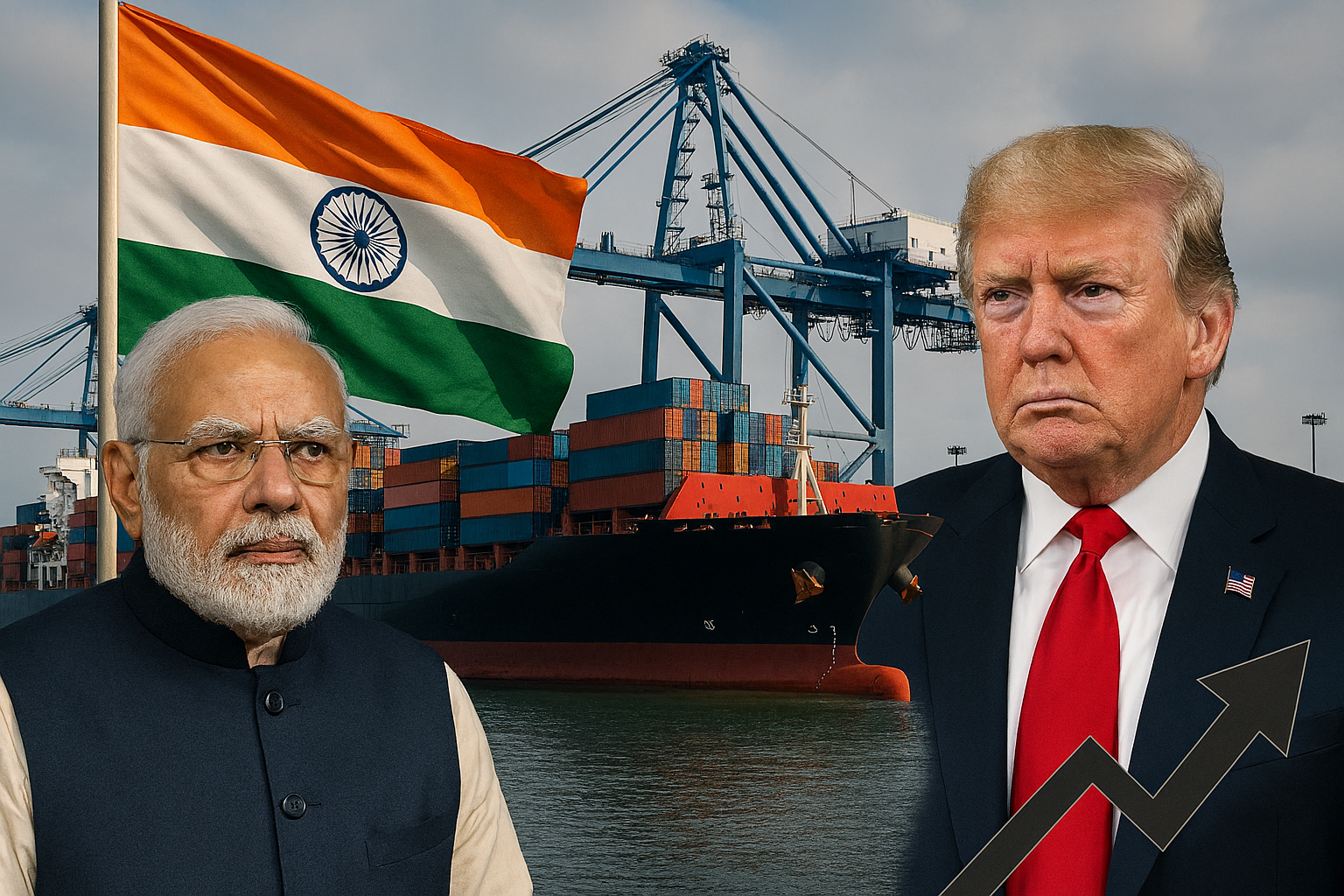
New Delhi / Washington, August 8, 2025: In a dramatic escalation of trade tensions, the United States has issued a sweeping 50% tariff on a broad range of Indian exports, including marine-related goods, as a punitive measure for New Delhi’s continued purchases of Russian oil. The additional 25-percentage-point levy, stacked onto a prior 25% import tax, comes via a newly signed executive order and is slated to take effect on August 27, 2025.
Key economic analysts warn that this tariff increase could slow India’s GDP growth by as much as 1%, especially hitting manufacturing and export-driven sectors hard. The move has ignited outrage in New Delhi, with India’s Ministry of External Affairs calling the tariffs “unfair, unjustified and unreasonable” and accusing the U.S. of double standards. Prime Minister Modi has vowed to “pay a heavy price” in defense of farmers, fishermen, and exporters.
Diplomatic tensions are mounting, with President Trump ruling out any trade negotiations with India until the tariff dispute is resolved. As mistrust deepens between the two democratic partners, India has begun consultations with other BRICS nations to coordinate a response, while exploring new strategic trade alignments.
The marine industry faces significant headwinds from this decision. Exporters of Indian-made vessels, components, and seafood are likely to see a sharp drop in U.S.-bound orders as higher tariffs drive up costs for American buyers. Shipping costs are also expected to rise as exporters seek alternative markets, with rerouting and logistical adjustments adding to operational expenses. The disruption comes on top of an already fragile global shipping environment, where sanctions and tanker shortages have pushed freight rates upward.
The sanctions-driven reliance on so-called “shadow fleets” , vessels operating under obscure flags and minimal oversight, is expected to increase. This raises safety and environmental risks, with potential accidents or oil spills threatening coastal ecosystems and marine biodiversity. Such developments could further erode confidence in India’s export logistics, particularly for time-sensitive and perishable marine products.
In the long term, Indian marine exporters may need to pivot toward Europe, Southeast Asia, or the Middle East. However, building new trade corridors and customer trust will take time, and the immediate impact on revenues, employment, and port operations could be severe. The U.S. tariff hike is therefore more than a trade penalty, it is a wave of disruption poised to reshape the course of India’s marine industry.
