

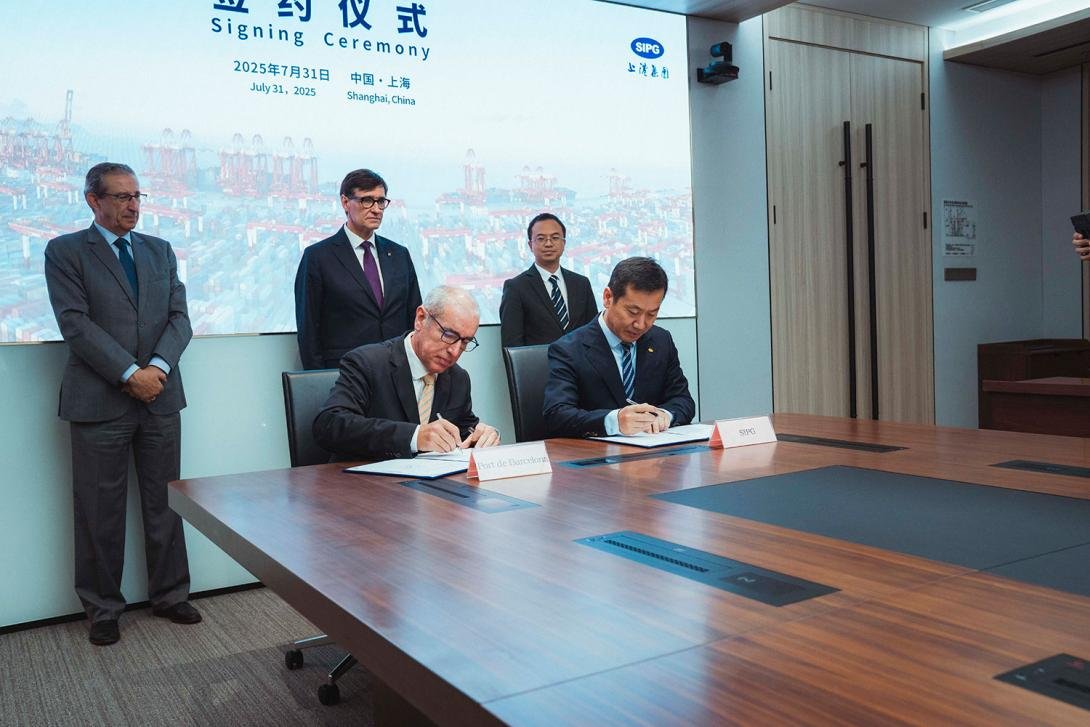
Barcelona, Spain – August 6, 2025 — In a significant step towards sustainable maritime trade, the Port of Barcelona and Shanghai International Port Group (SIPG) have formalized a strategic agreement to develop a Green and Digital Shipping Corridor between the two major global ports.
Signed on August 4, 2025, the agreement marks a deepened collaboration focused on accelerating the decarbonisation and digital transformation of port operations. The initiative builds on a foundational memorandum signed in 2024, expanding areas of cooperation to include smart-port development, alternative fuel infrastructure, and port management training programs.
Advancing Sustainability and Innovation
Under the new framework, both ports have committed to promoting the use of alternative fuel vessels, including methanol and ammonia-powered ships, and to investing in the necessary green infrastructure to support them. This includes the deployment of onshore power supply systems—enabling ships to shut down their engines while docked—and shared efforts to develop zero-emission logistics chains.
Additionally, the agreement places a strong emphasis on digitalisation and data interoperability, aligning with global standards for smart-port technology and streamlined cargo operations.
“This partnership is a milestone in our shared commitment to sustainable shipping,” said Lluís Salvadó, President of the Port of Barcelona. “By linking our port with Shanghai, the world’s busiest container hub, we are setting a global example for green innovation in the maritime sector.”
Formation of Bilateral Working Group
A dedicated bilateral working group will be established to identify priority projects in four main areas:
- Sustainability and Green Shipping
- Digital Innovation and Data Standardisation
- Cruise Operations and Environmental Management
- Port Security and Workforce Training
The group will coordinate joint studies, technical exchanges, and pilot projects aimed at accelerating the corridor’s deployment.
Strategic and Global Implications
The agreement arrives at a critical moment as ports across the European Union prepare to comply with incoming environmental mandates, including requirements for vessels to connect to shore power by 2030. For its part, Shanghai has been investing heavily in AI-driven port management systems and clean fuel infrastructure, underscoring its global leadership in smart-port operations.
By combining Barcelona’s sustainability goals with Shanghai’s digital capabilities, the corridor has the potential to reshape trade flows between Asia and Europe.
“This collaboration not only strengthens trade ties but also sets a benchmark for how major ports can lead the way in environmental responsibility,” SIPG officials noted during the signing ceremony.
Catalonia’s Wider Strategy
The green corridor is also a key component of the Government of Catalonia’s broader strategy to increase maritime connectivity with Asia. In recent months, President Pere Aragonès has pushed for expanded logistics cooperation with China, while also pursuing low-emission shipping solutions to align with EU climate targets.
Looking Ahead
As more global ports pursue similar green corridor initiatives—including those recently launched between Singapore and Los Angeles—the Barcelona–Shanghai route stands out as one of the most ambitious yet, given the scale of cargo volumes, technological capability, and political alignment involved.
The first pilot voyages operating under the corridor are expected to begin in early 2026, pending infrastructure upgrades and regulatory harmonisation.
Stay with us for verified, expert, and on-the-ground maritime journalism.
Contact: news@allinmaritime.com
Tel: +27 063 069 1191
Offices: Durban | Lagos | Abidjan | Dakar
All in Maritime News — Your Source for Maritime Intelligence
