

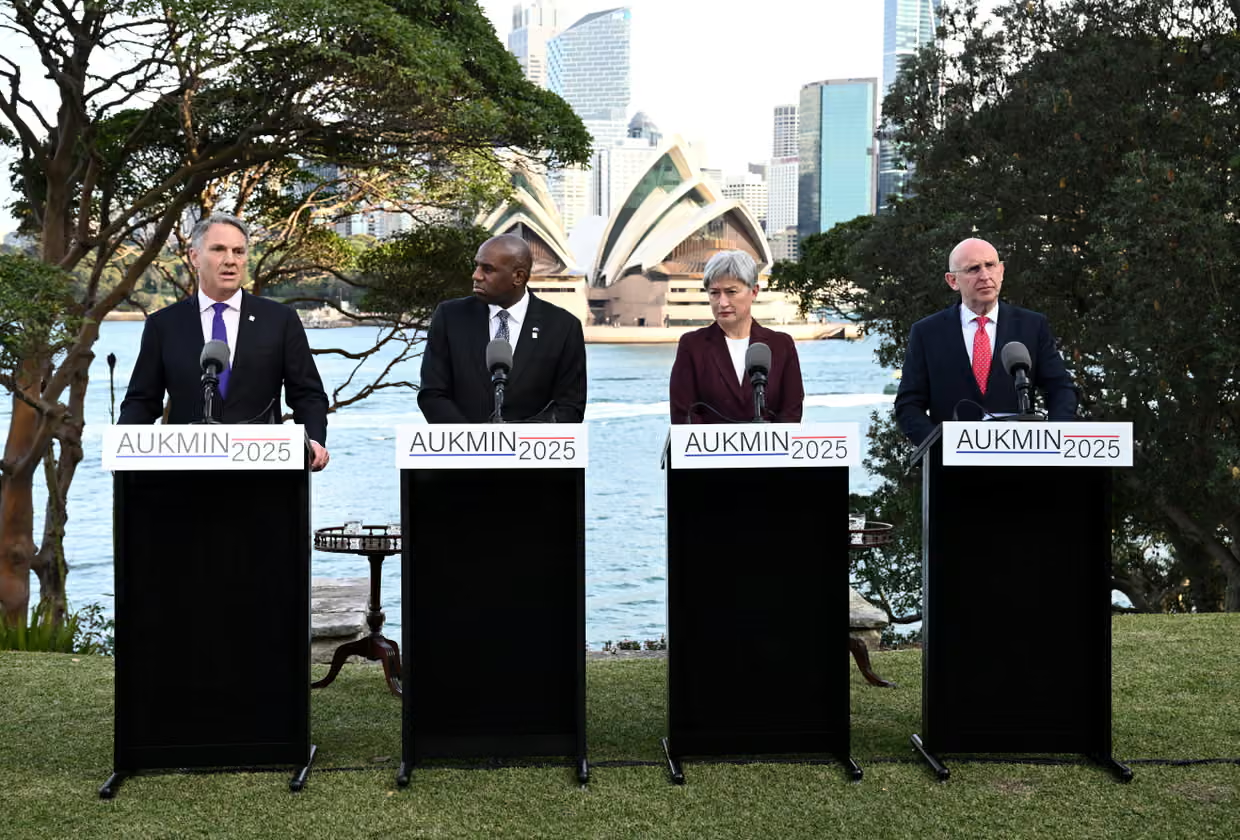
In a historic move that cements a half-century of defence collaboration, Australia and the United Kingdom have signed the “Geelong Treaty”—a sweeping 50-year agreement to deepen bilateral efforts in nuclear submarine development under the AUKUS framework.
The landmark agreement was signed in Geelong, Victoria, by Australia’s Defence Minister Richard Marles and UK Defence Secretary John Healey. The treaty sets in motion long-term collaboration across the full life cycle of the SSN‑AUKUS submarines, a next-generation nuclear-powered attack submarine jointly developed by the two countries.
A Comprehensive Defence Partnership
The Geelong Treaty marks a significant expansion of the AUKUS alliance, particularly under Pillar I of the trilateral agreement, which focuses on the design, construction, operation, maintenance, and disposal of nuclear-powered submarines. While AUKUS also includes the United States, the Geelong Treaty underscores a bilateral effort between Australia and the UK to secure a reliable, independent pathway forward, even as Washington undergoes a strategic review of its AUKUS commitments.
This agreement includes provisions for:
- Joint submarine construction and design
- Shared operational responsibilities
- Maintenance and sustainment strategies
- Responsible disposal of nuclear materials
- Rotational basing of UK Astute-class submarines at HMAS Stirling
- Coordinated regulatory and industrial development
Economic and Strategic Gains
The economic implications of the treaty are profound. Australia anticipates the creation of approximately 20,000 jobs linked to submarine construction, describing the initiative as the country’s largest-ever industrial project. In the UK, defence exports under the agreement are projected to generate up to £20 billion over 25 years, supporting over 21,000 jobs across shipbuilding and supply chains.
“The Geelong Treaty is not just a military alliance—it’s an industrial revolution for Australia,” said Defence Minister Richard Marles. “This is a 50-year commitment that will transform our national capabilities and regional security posture.”
John Healey, UK Defence Secretary, echoed the sentiment: “This agreement guarantees naval strength, regional security, and economic opportunity. It supports thousands of jobs in Britain and reflects our leadership in advanced defence manufacturing.”
UK Foreign Secretary David Lammy added, “This is a blueprint for strategic cooperation—proof that allied democracies can stand together to ensure peace and prosperity.”
Programme Timeline and AUKUS Context
The first SSN‑AUKUS submarines are expected to become operational in the UK by the late 2030s, with Australia’s fleet entering service in the early 2040s. To bridge the capability gap, Australia plans to acquire three to five U.S.-built Virginia-class submarines in the early 2030s.
Australia’s overall investment under AUKUS is valued at A$368 billion over 30 years. Already, more than A$800 million has been paid to U.S. suppliers to secure technology and design resources necessary for the SSN‑AUKUS program.
A United Front in a Changing Strategic Landscape
The Geelong Treaty comes at a pivotal moment. As geopolitical tensions grow in the Indo-Pacific and uncertainty looms over the future direction of U.S. foreign policy, Australia and the UK have reinforced their commitment to long-term defence readiness.
Analysts note that the treaty not only strengthens military deterrence but also enhances industrial interoperability, technology sharing, and sovereign defence capabilities for both nations.
In sealing the Geelong Treaty, the UK and Australia have sent a clear message: shared security, economic growth, and technological leadership remain cornerstones of their alliance through the 2070s and beyond.
All in Maritime News will continue tracking the regional security situation and its impact on international shipping and labor dynamics.
Stay with us for verified, expert, and on-the-ground maritime journalism.
Contact: news@allinmaritime.com
Tel: +27 063 069 1191
Offices: Durban | Lagos | Abidjan | Dakar
All in Maritime News — Your Source for Maritime Intelligence
