

By All in Maritime News | Nairobi, Kenya
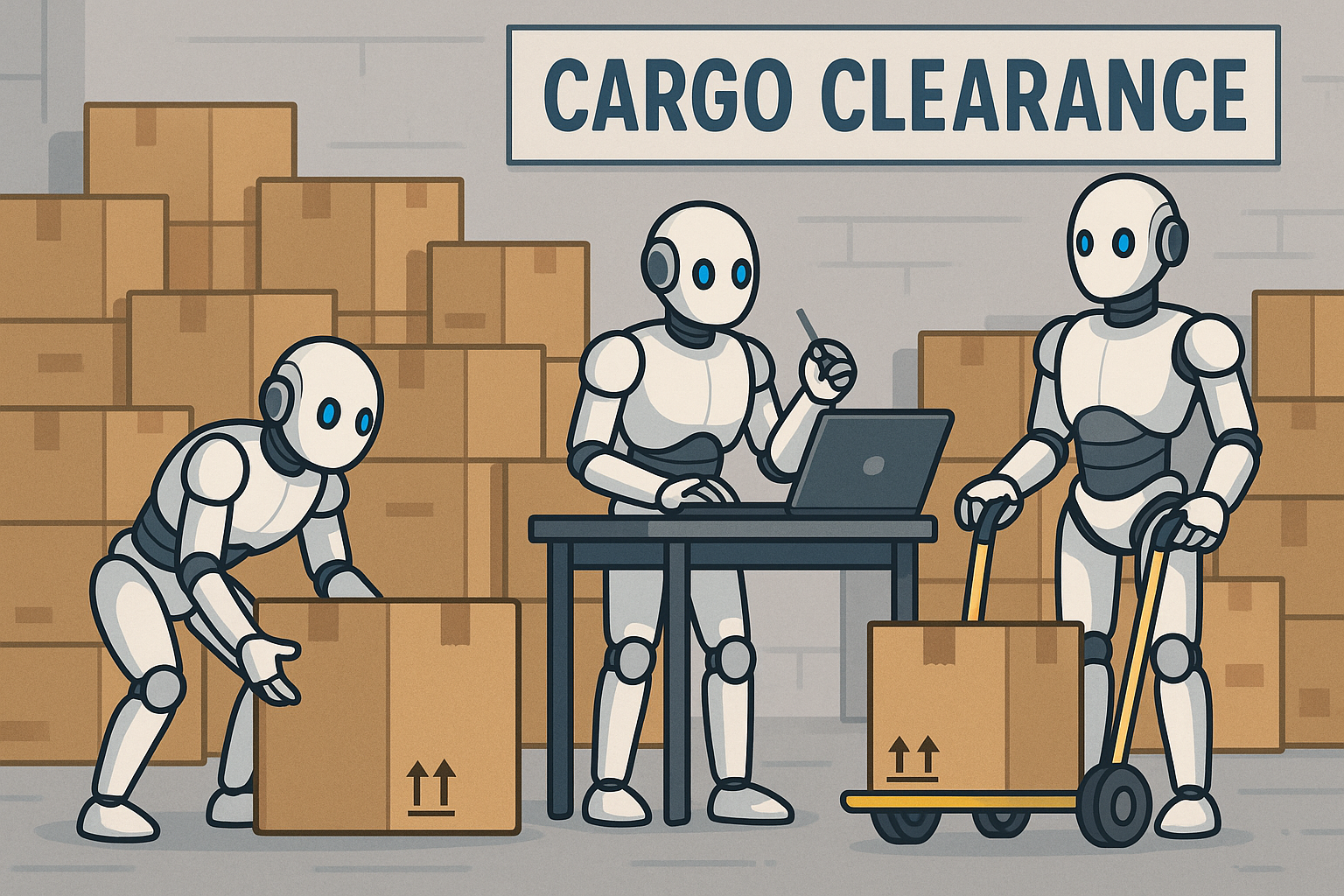
The freight clearing industry in Eastern Africa is on the brink of a digital upheaval. As artificial intelligence (AI), automation, and data-driven platforms seep into global logistics operations, a critical question is emerging: Will human customs agents and brokers be replaced by digital systems?
This in-depth report examines the pace of digitization in Eastern Africa’s clearance industry, the capabilities of AI systems in customs and cargo processing, and whether traditional clearing agents are evolving or becoming obsolete.
1. The Rise of Digital Clearance Platforms
Across Kenya, Tanzania, Rwanda, and Uganda, customs authorities are fast-tracking automation.
In Kenya, the Kenya TradeNet System, managed by KenTrade, has digitized over 90% of clearance documentation. In Tanzania, TANCIS (Tanzania Customs Integrated System) automates duty assessments, declarations, and risk profiling.
Key Features:
- AI-powered anomaly detection in cargo manifests.
- Real-time document tracking and digital risk scoring.
- Blockchain-based audit trails for tamper-proof clearance records.
According to the EAC Secretariat, the region is now entering the second phase of the Single Customs Territory, which includes AI-driven cargo routing and smart valuation algorithms.
2. AI vs. Human Brokers: What Can Machines Actually Do?
AI systems can now:
- Instantly compare import/export declarations with global trade databases.
- Flag suspicious HS codes or undervaluation.
- Generate optimized cargo routing based on cost, risk, and congestion data.
- Simulate scenarios for tax and duty planning.
But human agents still dominate:
- Dispute handling: Customs disputes still require experienced negotiators.
- Multi-agency coordination: Licensing bodies, food safety, environmental, and revenue authorities each have manual layers that AI cannot yet penetrate.
- Client representation: SME shippers rely heavily on agents for physical presence, documentation bundling, and local transport coordination.
“AI is fast, but not omniscient,” says Susan Mungai, Director at East Africa Freight & Logistics Association. “Customs is still a negotiation game. You need people who understand grey areas and local nuances.”
3. The New Breed: Tech-Enabled Customs Agents
Rather than being replaced, many forwarders are transforming into tech-enabled trade advisors. Companies like Siginon, Bollore, and Express Shipping & Logistics have built digital platforms offering:
- Client dashboards for real-time cargo tracking.
- AI-generated tax projections.
- Auto-filling of repetitive documents.
Observater Surveys and Services Ltd, a regional marine and cargo survey inspection services provider, has gone a step further by integrating to clients and improving reach of its inspection services—so inspection reports automatically trigger clearance steps.
“Technology is not a threat; it’s a force multiplier,” says Eng. Daniel Esilaba, Managing Director at Observater. “We use automation to reduce delays, improve accuracy, and free up our people to handle what machines can’t—judgment, negotiation, and crisis response.”
4. Regulatory Readiness and the Digital Divide
Government support is growing. Kenya Revenue Authority (KRA), Uganda Revenue Authority (URA), and Rwanda Revenue Authority (RRA) have each launched digital literacy campaigns targeting licensed customs agents. The African Development Bank (AfDB) is also funding digitization hubs for SMEs.
But gaps persist:
- Many rural clearing agents lack digital access.
- Legacy freight firms resist platform migration.
- Cybersecurity risks are rising as digital systems become central to trade.
In response, regulators are tightening digital certification requirements, forcing brokers to meet minimum ICT compliance by 2026.
5. What the Future Looks Like: Symbiosis, Not Replacement
AI and digital platforms are reshaping how cargo is cleared—but they are not replacing humans. Instead, the region is seeing a hybrid model:
- Machines handle speed and scale.
- Humans provide judgment, empathy, and contextual interpretation.
This transformation mirrors global trends. In Singapore, the Netherlands, and South Korea, human-led digital brokerage is the dominant model, where tech-enhanced agents deliver both efficiency and regulatory clarity.
Eastern Africa is likely to follow a similar path—one where the most successful clearing firms are those that embrace technology, train their people, and redefine their roles from “paper-pushers” to “strategic trade advisors.”
As AI advances, the real winners will not be machines or people alone, but companies that blend both to deliver faster, smarter, and more transparent cargo movement across borders.
Final Word as Shared by the Experts:
Digital transformation in customs is no longer optional. And as the clearing industry evolves, Observater Surveys and Services Ltd remains a trusted enabler—blending human expertise with digital agility to support importers, exporters, insurers, and port stakeholders across East Africa.
For insights, training, or partnership enquiries, contact us at: info@observater.com
Visit: www.observater.com
Continue Exploring With All in Maritime News
At All in Maritime News, we remain committed to unpacking the future of global logistics, marine trade, and port innovation across Africa and beyond. Follow us for more expert insights, data-driven investigations, and sector-shaping commentary.
Contact the newsroom: editor@allinmaritime.com | www.allinmaritime.com
