

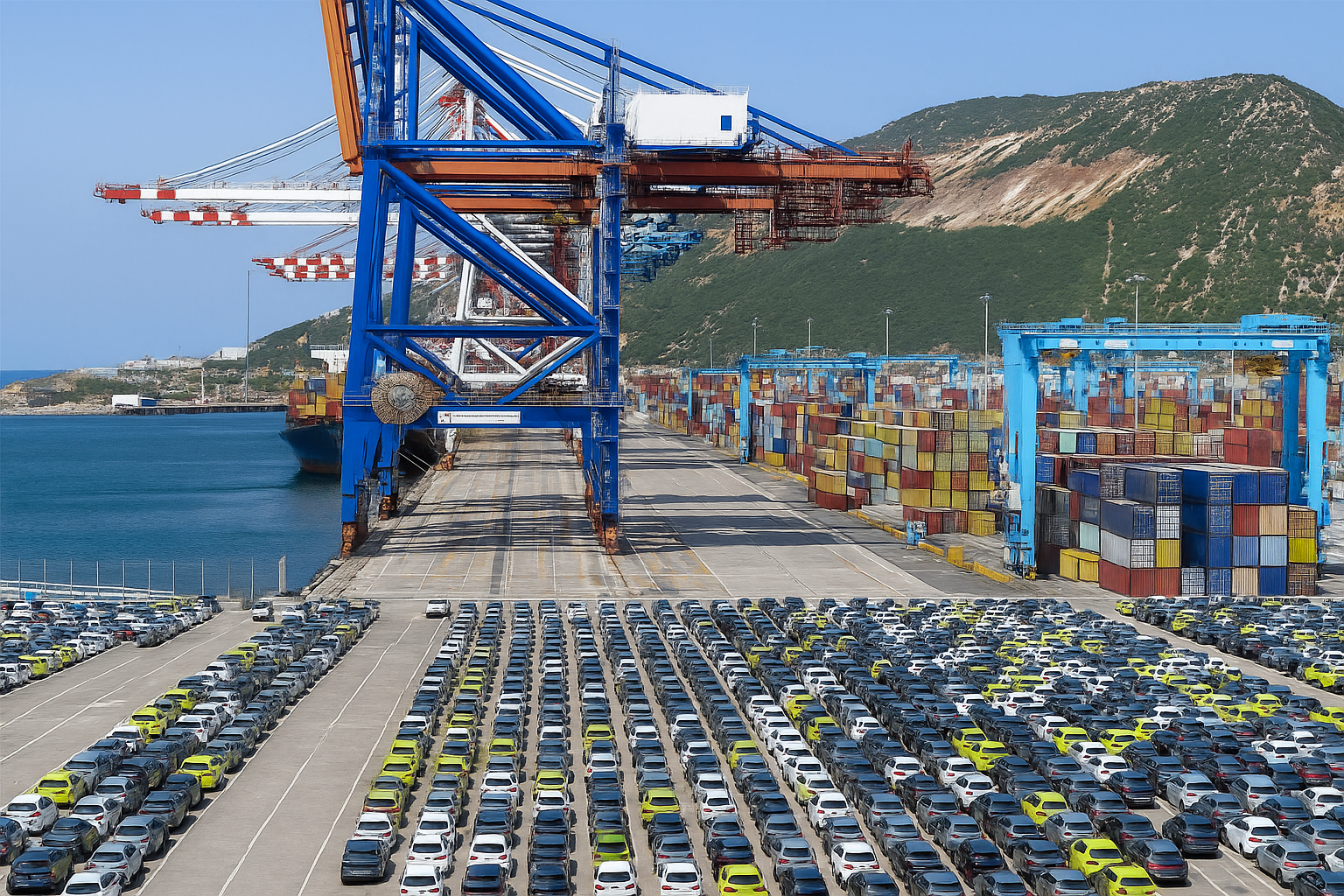
image of Tangier Med Port; The Port Complex Generates USD 8 Billion in Annual Revenue
By Eng. Daniel Esilaba | Marine Surveyor, Observater Surveys and Services Ltd & Infrastructure Policy Commentator
June 2025 | All in Maritime News
With shifting global trade dynamics, rising vessel sizes, and regional demand for new logistics routes, Kenya has a narrow but potent opportunity to transform the ports of Mombasa and Lamu into USD 15 billion-a-year economic powerhouses. Not by just expanding quays, but by rethinking ports as ecosystems of trade, energy, finance, industry, and data.
I. What’s at Stake?
| Port | Current Cargo (2024) | Revenue Output (Est.) | Capacity Potential |
|---|---|---|---|
| Mombasa | 35+ million tonnes | < USD 800 million/year | 2x with automation |
| Lamu | < 1 million tonnes | < USD 50 million/year | 20–25 million tonnes/year |
Both ports are underperforming relative to their geography, infrastructure, and strategic position in global shipping. By contrast, global peers like Singapore (USD 20B+), Busan (USD 18B), and Tanger Med (USD 8B) prove what is possible through integration.
II. Pathway to USD 15 Billion: Five Strategic Pillars
Each pillar delivers quantified annual value to the economy.
1. Advanced Industrial Zones Around the Ports
Annual Value Addition: USD 4.5 Billion
Singapore & Rotterdam Strategy: Port-led zones where goods are processed, assembled, packaged, and shipped under free-zone policies.
Kenya’s Actions:
- Mombasa: Fully operationalize Dongo Kundu SEZ with ready-to-lease space for:
- Agro-processing (tea, avocados, nuts)
- Automotive assembly
- Fertilizer blending
- Pharmaceutical repackaging
- Lamu: Greenfield planning for dry ports and regional trade hubs for Ethiopia and South Sudan
Why It Works: Industrial activity near ports shortens logistics cycles, improves cashflow, and creates tax streams from exports.
2. Clean Bunkering & Marine Fuel Hub
Annual Value Addition: USD 2.8 Billion
Singapore Strategy: Over 45 million tonnes of bunkers sold annually. Transitioning to biofuels, LNG, and methanol.
Kenya’s Actions:
- Construct LNG and methanol bunkering terminals at:
- Shimanzi (Mombasa): retrofit for low-carbon fuel
- Lamu Jetty: develop with export pipelines
- Introduce electronic bunker delivery notes (e-BDNs)
- Legislate for zero-tolerance on fuel tampering, with digital audits
Why It Works: Vessels seek cleaner fuel ports with transparency and depth. Lamu’s 18m draft can host the largest bunker takers in the region.
3. Digital Infrastructure & Smart Port Systems
Annual Value Addition: USD 2.5 Billion
Busan & Hamburg Strategy: Smart logistics networks with digital twin yard models, predictive tracking, and integrated customs AI.
Kenya’s Actions:
- Deploy a national Port Community System (PCS) integrating:
- Customs, port operators, shipping lines, cargo owners, KRA, and rail operators
- Install AI-driven terminal operating systems (TOS)
- Use blockchain for cargo chain-of-custody to eliminate fraud
- Build a central cargo visibility command center in Nairobi
Why It Works: Digitization removes inefficiencies, improves revenue capture, and enables high-volume throughput with reduced congestion.
4. Transshipment & Global Trade Realignment via Lamu
Annual Value Addition: USD 3 Billion
Salalah & Colombo Strategy: Use deep water and strategic geography to attract feeder and mother vessels.
Kenya’s Actions:
- Incentivize direct Asia-to-Lamu megaship calls
- Build East Africa feeder connections (Tanzania, Somalia, Mozambique)
- Negotiate corridor guarantees with Ethiopia and South Sudan
- Offer volume-based discounts and long-term handling contracts
Why It Works: Red Sea disruptions, Suez congestion, and increasing ship sizes are forcing re-routing. Lamu can position as the quiet transshipment alternative.
5. Maritime Finance & Legal Services Hub
Annual Value Addition: USD 2.2 Billion
London, Dubai, Singapore Strategy: Surround shipping activity with insurance, legal, and arbitration services.
Kenya’s Actions:
- Establish Maritime Finance & Arbitration Center in Nairobi
- Launch Kenya Shipping Exchange:
- Freight rates
- Commodity futures linked to port volumes
- Green marine bonds
- Fast-track maritime law, marine insurance, and ship leasing policies
Why It Works: Finance and dispute resolution add downstream value and attract international trade parties.
III. Implementation Roadmap (2025–2037)
| Phase | Years | Key Milestones |
|---|---|---|
| Phase I | 2025–2028 | Port digitization, customs overhaul, SEZ rollout |
| Phase II | 2028–2032 | Energy terminals, Lamu activation, bunkering growth |
| Phase III | 2032–2037 | Finance hub, transshipment maturity, maritime legal zone |
By 2037, a fully integrated and smart port system can reach USD 15 billion in direct and indirect economic output, supporting over 2 million jobs and positioning Kenya as a maritime and logistics leader in Africa.
Final Perspective
The ambition to generate USD 15 billion annually from Mombasa and Lamu is not only realistic—it is urgent. With strategic geography, deep natural ports, strong regional cargo demand, and a growing industrial policy base, Kenya is equipped for this scale.
What’s needed now is execution: policy harmonization, institutional reform, private capital mobilization, and digital integration. The next decade will determine whether Kenya’s coastline remains a trade pass-through—or becomes a continental engine of commerce.
Eng. Daniel Esilaba
Marine Surveyor at: Observater Surveys and Services Ltd, Special
Infrastructure & Maritime Policy Commentator, All in Maritime News
