

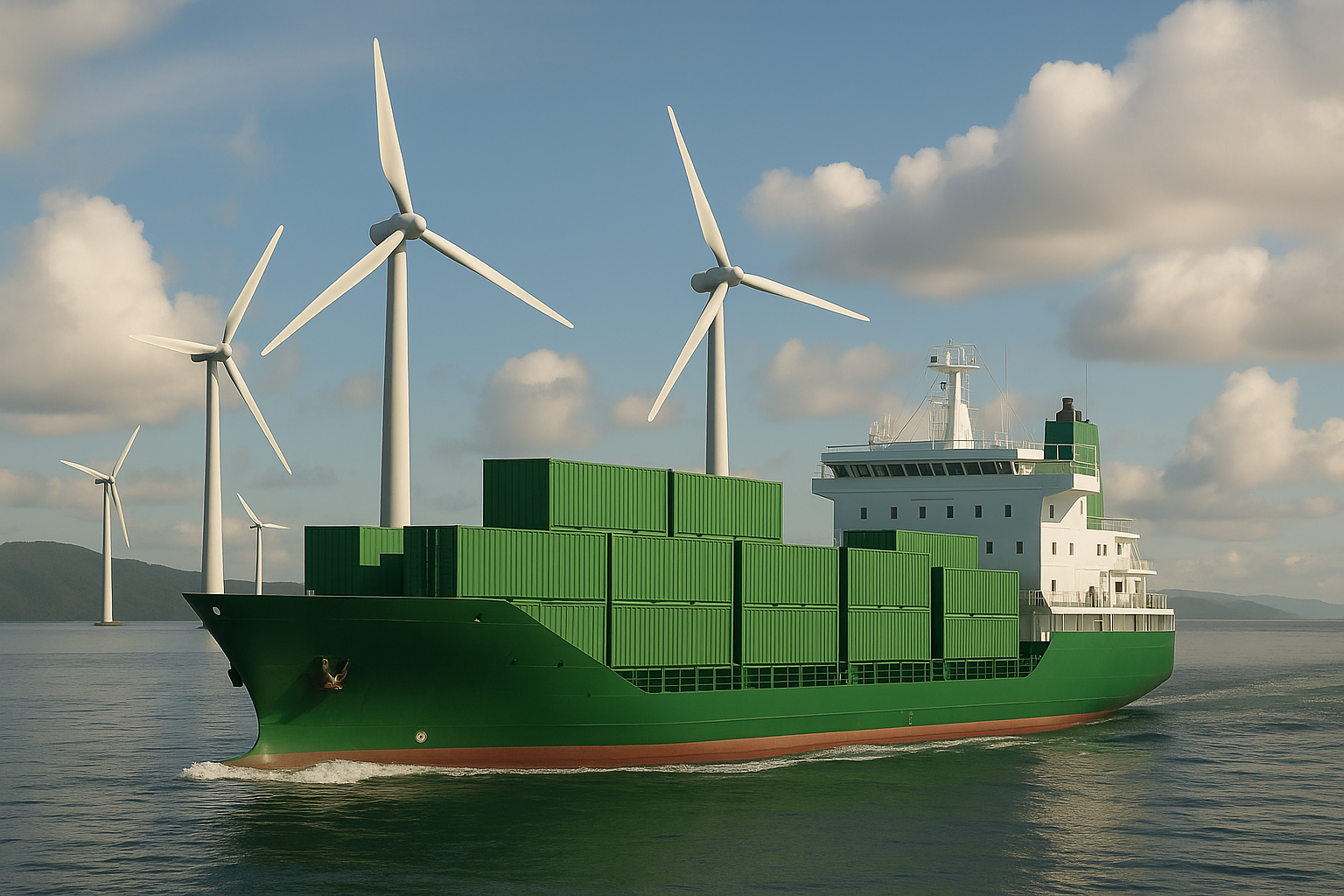
The maritime sector is undergoing a transformative shift as major players adopt green fuel technologies and alternative propulsion systems at an unprecedented scale. From methanol-powered giants to carbon dioxide (CO₂) carriers, recent vessel launches reflect a firm commitment to decarbonization across global shipping.
In recent months, industry leaders such as Maersk, Pioneer Logistics, and Northern Lights have unveiled new vessels designed for lower emissions, cleaner fuel usage, and sustainable operations. These developments are not only technological milestones—they signal a fundamental reshaping of maritime transport economics, environmental policy, and global logistics.
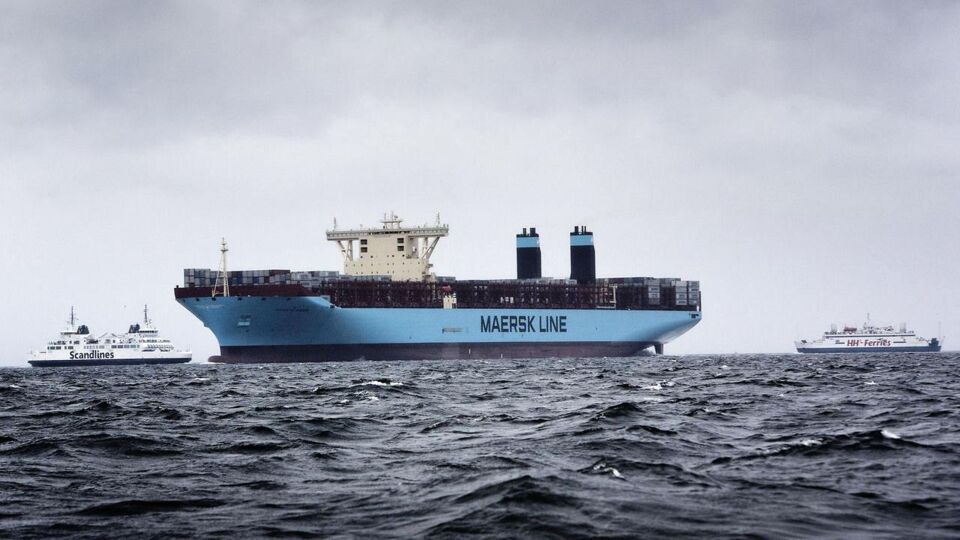
Maersk Unveils Methanol-Powered Berlin Mærsk
A.P. Moller-Maersk has officially christened the Berlin Mærsk, one of the world’s largest container vessels built to operate on green methanol. Constructed by Hyundai Heavy Industries, this 17,000+ TEU vessel is part of a six-ship series that embodies Maersk’s commitment to achieving net-zero greenhouse gas emissions by 2040.
According to Maersk’s executive team, this step marks the beginning of a large-scale transition, where clean fuel compatibility becomes the new benchmark for operational and regulatory compliance.
For shipbuilders and fuel suppliers, this is a breakthrough moment. Yards are now being commissioned to build dual-fuel or methanol-ready vessels, and suppliers of bio-methanol and e-methanol are seeing rising demand from both established shipping lines and smaller operators looking to meet upcoming IMO and EU regulations.
Cargo owners—ranging from large FMCG companies to electronics manufacturers—stand to benefit from lower emissions footprints in their supply chains. For them, low-carbon shipping isn’t just about compliance—it’s also a growing commercial expectation from customers, investors, and regulators.
Pioneer Logistics Prepares for Methanol with Future-Ready Tankers
Pioneer Logistics has launched two methanol-ready tankers designed with the flexibility to shift fuel type as infrastructure and supply chains evolve. While the vessels are currently running on traditional fuels, they can be retrofitted to use methanol with minimal changes, providing owners with a transition strategy that balances risk and readiness.
This approach appeals to shipping lines that are cautious about immediate infrastructure gaps, but want to be positioned ahead of environmental enforcement deadlines.
CO₂ Carrier Northern Pathfinder Signals New Era in Maritime Carbon Capture
In Oslo, Northern Lights—an industrial partnership formed by Equinor, Shell, and TotalEnergies—formally named the Northern Pathfinder, a state-of-the-art CO₂ carrier. It is the second in a fleet designed to transport captured CO₂ from industrial emitters in Europe to secure geological storage sites beneath the North Sea.
The vessel is part of a larger European strategy to make Carbon Capture and Storage (CCS) a scalable climate solution. With industries under pressure to cut emissions beyond what renewable energy alone can achieve, marine transport of CO₂ is emerging as a critical link in the net-zero chain.
This move opens a new niche in maritime logistics, offering opportunities for shipowners and operators to diversify into carbon transport. Meanwhile, heavy industries such as cement, steel, and chemicals now have a viable pathway to reduce net emissions, especially in regions where pipeline transport is impractical.
Ports and maritime authorities are also expected to adapt by establishing CO₂ handling terminals and regulatory frameworks to manage safety and emissions protocols.
Ammonia, Hydrogen, and the Fuel Mix of the Future
Alongside methanol and CO₂-focused innovations, attention is growing around hydrogen and ammonia as next-generation fuels. Several engine manufacturers are now testing ammonia-compliant propulsion systems, while hydrogen is being trialed for short-sea routes and hybrid vessels.
This trend is prompting ports to plan new bunkering facilities, governments to draft supporting legislation, and insurance firms to model new risk profiles associated with alternative fuel handling.
To better understand the operational and legal implications of this evolving fuel landscape, All in Maritime News spoke with two highly respected voices in the African maritime sector: Michael Robin, Senior Bunker Surveyor at Observater Surveys and Services Ltd., and Mr. Jamal, a leading maritime law expert with extensive experience in global shipping regulation and contract law.
Michael Robin, Senior Bunker Surveyor – Observater Surveys and Services Ltd.
“We’re now dealing with a completely different class of fuel. Methanol, ammonia, and hydrogen introduce new dynamics in measurement accuracy, contamination risk, and safety standards. Our survey teams are updating protocols to match these requirements. This is not just about adopting new fuels; it’s about building new trust in fuel transactions and cargo integrity.”
“African ports must act now. The future of bunkering lies in clean, controlled systems—and we believe Observater will continue to lead in verifying fuel quality and quantity as vessels adapt to greener operations.”
Mr. Jamal, Maritime Law Expert and Legal Advisor
“The shift to alternative fuels is triggering a redefinition of shipping contracts, charterparty clauses, and fuel supply agreements. Traditional terms like ‘bunker quality’ and ‘quantity disputes’ now have to be interpreted in the context of dual-fuel systems and emerging fuels that behave differently under storage and transfer conditions.”
“There’s an urgent need for updated clauses addressing methanol fuel compatibility, liability for contamination or fuel degradation, and safety compliance in CO₂ and ammonia logistics. We’re also seeing the rise of environmental performance guarantees within charter parties—a legal frontier driven by commercial ESG expectations.”
“Port states and flag administrations must move faster to incorporate international conventions and create enforceable frameworks that align with IMO’s decarbonization pathway. Legal clarity is just as critical as technological advancement.”
Stakeholder Implications
The move toward green fuels is reshaping the landscape for nearly every segment of the maritime industry.
- Shipowners and operators are under pressure to modernize fleets with dual- or alternative-fuel vessels, with payback driven by regulatory relief, fuel efficiency, and market positioning.
- Shipbuilders are seeing rising demand for complex, high-tech vessels that comply with evolving standards.
- Fuel producers and energy firms are exploring new business models around methanol, ammonia, hydrogen, and CO₂ liquefaction.
- Port authorities must invest in new infrastructure, including safety protocols for bunkering non-conventional fuels.
- Cargo shippers are making procurement decisions based on emissions, environmental certifications, and green logistics options.
- Regulators are refining international rules around emissions ceilings, carbon pricing, and lifecycle fuel assessments.
Conclusion
Green fuel adoption in shipping is no longer a future concept—it is a present reality. From methanol-powered vessels like Berlin Mærsk to CO₂ carriers like Northern Pathfinder, the maritime industry is undergoing a once-in-a-generation transformation.
This shift is not without complexity. Fuel availability, infrastructure limitations, crew safety, and regulatory alignment remain major hurdles. However, the commitment from global players and growing collaboration across industries suggest that cleaner shipping is not just possible—it is inevitable.
As 2025 progresses, the maritime sector stands on the edge of a new operational paradigm, where climate strategy is embedded into fleet design, cargo routing, and commercial decision-making at every level.
For coverage on shipping innovation, logistics transformation, and marine energy transition, stay with All in Maritime News.
Contact: news@allinmaritime.com | Tel: +27 063 069 1191
Offices: Durban | Dar es Salaam | Nairobi | Dubai
Website: www.allinmaritime.com
All in Maritime News – Your Source for Global Maritime Intelligence
