

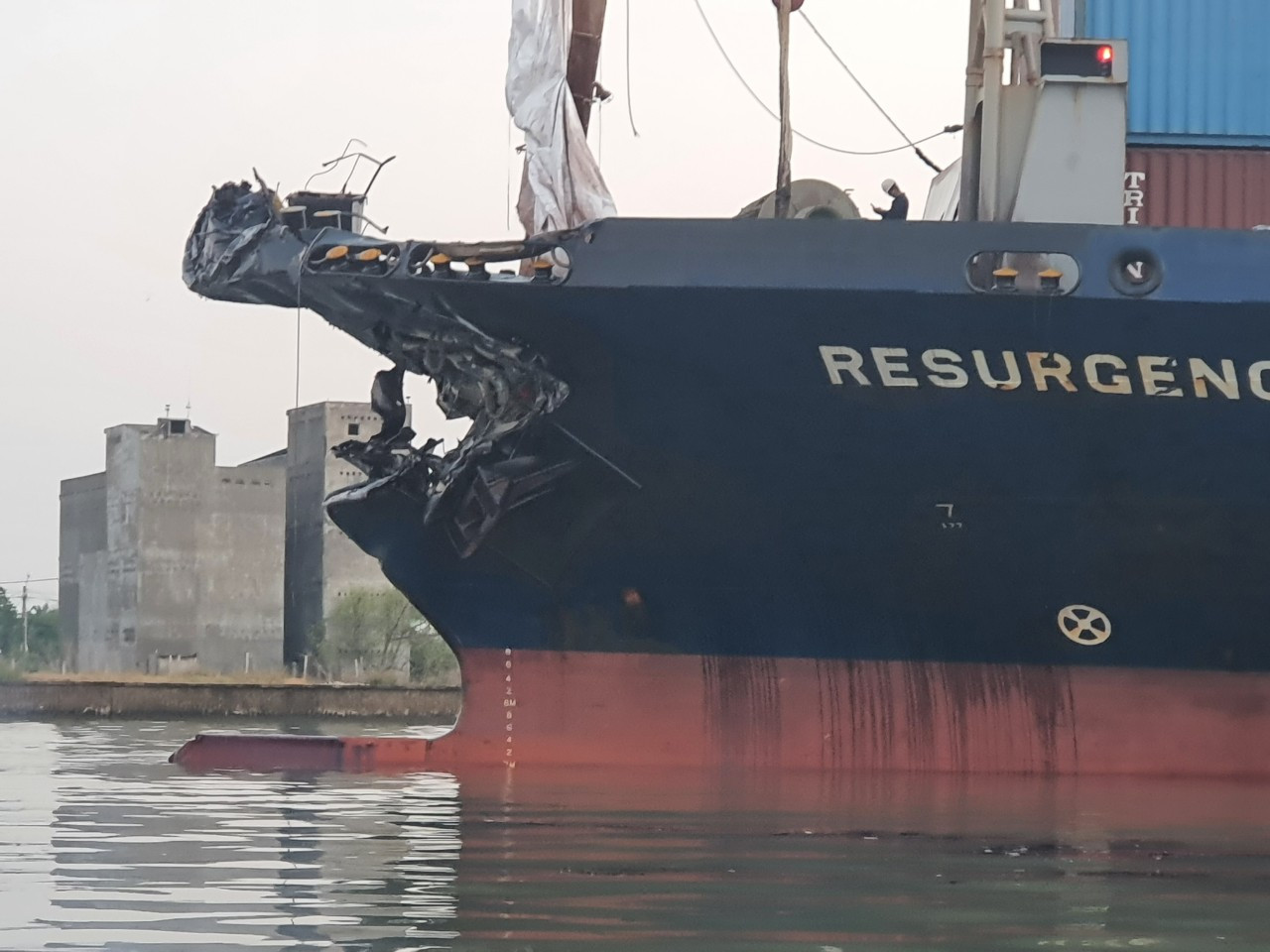
On the evening of April 25, 2025, a significant maritime incident occurred on the Long Tau River, a major commercial waterway near Ho Chi Minh City. At approximately 22:40 local time, the containership KMTC Surabaya collided with the bulk carrier Glengyle in narrow river confines near An Thoi Dong. The result: hull damage, flooding, an oil spill, and temporary disruption of key Southeast Asian cargo flows.
The 200-meter-long KMTC Surabaya, sailing upstream, struck the port side of the 181-meter Glengyle just forward of the superstructure. The impact tore open Glengyle’s hull, leading to uncontrolled water ingress into the engine room and cargo hold. Crew members managed to prevent a full sinking, but the vessel was partially grounded and later stabilized with tug assistance.
Initial reports suggest the incident may have involved poor pilot coordination, high vessel density, or failure to communicate between bridge teams. Marine safety investigators have launched a full inquiry.
ENVIRONMENTAL AND OPERATIONAL IMPACT
The collision caused a minor oil spill from Glengyle’s damaged bunker tank. Port and river authorities initiated an immediate containment operation. Booms were deployed, and oil skimmers were positioned by early morning April 26. The environmental damage was minimized due to rapid local response.
However, the collision forced the temporary closure of the Long Tau River’s main navigation lane, delaying several container and bulk shipments bound for terminals servicing Ho Chi Minh City. Shippers have reported extended wait times and vessel rerouting through alternate river channels, some of which are depth-limited and congestion-prone.
INSURANCE, CLAIMS, AND LIABILITY QUESTIONS
This incident raises complex insurance and liability questions. Preliminary estimates suggest significant hull damage to Glengyle, moderate damage to KMTC Surabaya, and disruption-related commercial losses. Cargo delay claims are anticipated.
Underwriters will assess whether the collision was due to crew error, navigational misjudgment, or pilot miscommunication. Surveyors have been dispatched to gather evidence, including voyage data recorder (VDR) logs, bridge audio, AIS playback, and weather reports. Liability may rest on joint fault or breach of pilotage standards under Vietnamese maritime law.
INSIGHT FROM EXPERTS AT OBSERVATER AND MARICLAIM
We spoke with leading marine survey and claims professionals from Observater Surveys & Services Ltd. and Mariclaim Global Marine Surveyors and Adjusters Ltd. to interpret the incident from a risk, claims, and operational readiness perspective.
DICKENS OUMA – CLAIMS AND LOSS ADJUSTER, OBSERVATER SURVEYS & SERVICES LTD.
“In collisions of this nature, claims can extend far beyond physical hull damage. We’re looking at delay-related losses, fuel penalties, pollution response costs, and possible contract breach liabilities. If just-in-time cargo was affected, consignees will be pursuing time-sensitive claims.”
“Insurers will want irrefutable documentation. That means logbooks, navigational records, safety communications, and certified surveys from the scene. Our work in similar cases has shown that early response with an experienced adjuster makes all the difference.”
MIKE OTIENO – RISK CONSULTANT, OBSERVATER SURVEYS & SERVICES LTD.
“River navigation incidents are often overlooked compared to open-sea collisions, but the density of traffic and limited room for error make them extremely high-risk zones. This case underscores the need for advanced risk profiling of narrow channels, vessel traffic monitoring, and pilot audit systems.”
“From a preventive standpoint, vessel operators should be revisiting their river navigation SOPs. We recommend enhanced pilotage verification protocols and real-time navigation support for transits in constrained waterways.”
PETER MWANGANGI – MARINE SURVEYOR, MARICLAIM GLOBAL MARINE SURVEYORS AND ADJUSTERS LTD.
“As global surveyors, we’re increasingly called to inland waterway incidents where the technical complexity rivals open-sea accidents. What matters now is fast deployment of neutral survey teams to assess damage, interview crews, and preserve evidence. Delay compromises truth.”
“We are also seeing regulators demand more transparency in pilot behavior and bridge resource management. Lessons from this collision will likely lead to tighter rules for VDR retention, crew rest audits, and river pilot certification.”
A REGIONAL LOGISTICS WARNING

The Long Tau River connects Ho Chi Minh City to the South China Sea and is a vital trade artery for Vietnam’s import/export flows. This incident, while contained, reveals how quickly a localized collision can ripple through regional supply chains.
Port congestion, extended anchorage times, and vessel deviation from schedule have consequences for agricultural exports, container schedules, and bulk imports such as coal, cement, and fertilizer. Delays now extend beyond the collision site to dependents awaiting cargo in Cambodia, Thailand, and Southern China.
ABOUT OBSERVATER AND MARICLAIM

Observater Surveys & Services Ltd. and Mariclaim Global Marine Surveyors and Adjusters Ltd. serve clients globally, delivering independent marine inspection, claims handling, and emergency response across ports, inland rivers, and offshore zones. Their core services include:
- Collision and grounding investigations
- Claims support for delay, loss, and damage
- Technical surveys for insurers and re-insurers
- Bridge team behavior audits and log analysis
- Rapid deployment for marine emergencies
Email: ops@observater.com
Website: www.observater.com
ALL IN MARITIME NEWS TRACKING TRADE, MAPPING RISK, REPORTING TRUTH.
This incident highlights a persistent gap in global maritime oversight: the vulnerability of inland waterways. As vessel size increases and port traffic intensifies, the risks on rivers like the Long Tau must no longer be treated as secondary. They are primary—and they require the same vigilance, regulation, and preparedness as the open seas.
Filed by All in Maritime News Desk – 1st May 2025
